DESIGNERS TALK 01
Designing the Very Essence of a Product
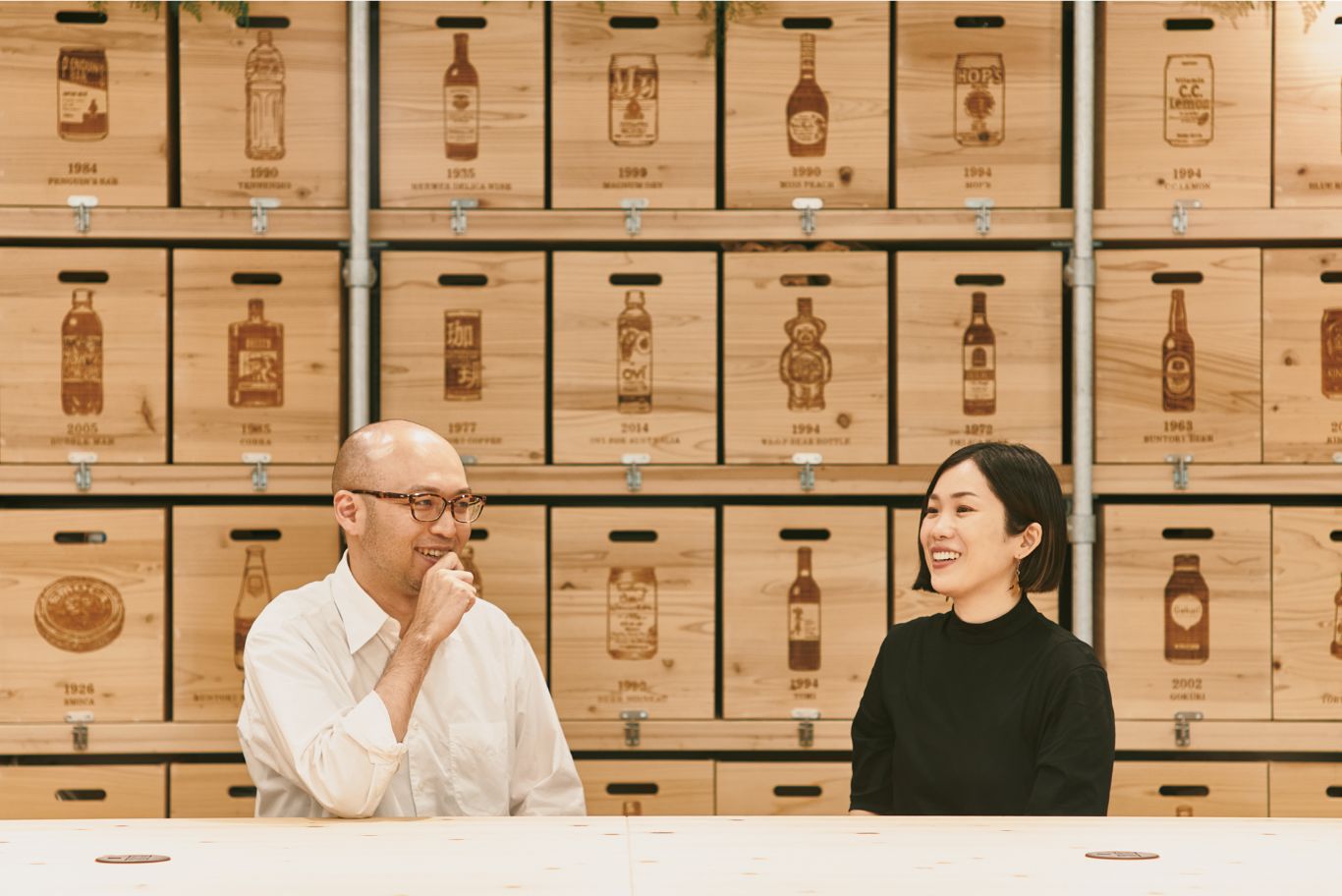
Kei and Kaoru have worked as Design Directors on some of Suntory's most iconic brands, including the green tea Iyemon and functional beverage GREEN DA・KA・RA (Kei), and the coffee CRAFT BOSS and non-alcoholic beer ALL-FREE (Kaoru). Having both joined Suntory as experienced professionals, the two are able to provide objective perspectives as they talk about the Suntory Design Center, and our approach to Product Design.
Interviewed in 2022

Kei NISHIKAWA
Graduated from Tama Art University's Department of Design, Faculty of Art and Communication. Worked for a design firm doing editorial design before joining Suntory in 2009.
Kaoru KOJIMA
Graduated from a university in the United States. Worked for an international branding agency and an international appliance maker before joining Suntory in 2015.
Index
-
Talk Topic 1
See It Where the Action Is
-
Talk Topic 2
The Merits of Teams
-
Talk Topic 3
Even When We're Silly, We Go All the Way
-
Talk Topic 4
The Initial Concept Never Makes It All the Way
-
Talk Topic 5
Turn Failures into Stepping Stones!
-
Talk Topic 6
We Don't "Renew" — We "Revitalize"
-
Talk Topic 7
"Making People's Lives Better"
See It Where the Action Is
—— How would you describe your role as Designers at Suntory?
For starters, what we often say is: We don't do "Package Design," we do "Product Design." For us, the design process starts with thinking about the actual concept of the product.
It's not like we're simply designing how something looks. The first thing we do is think about the product's purpose. I think that's where our design process always begins.
For me, the way we made Iyemon was very symbolic of Suntory's approach to Product Development.
How so?
For example, the first thing we did as the Development Team was to create a shared idea of "The World of Iyemon."
And you all went to Kyoto* to do that, right? *The ancient capital of Japan, and the home of the provider of Iyemon's tea leaves — the historic tea shop Fukujuen.
We did. Development started off with two key concepts: "Quintessential Kyoto Hospitality" and the idea that "Tradition is the culmination of ever-evolving innovation." So we all went to Kyoto, stayed at a historic traditional inn, and discussed those concepts while experiencing the hospitality for ourselves. That sure was a surprise. I was like, "What? We go all the way to Kyoto just for that? The whole team?"
That was back when you'd only just joined Suntory.
I doubt many other companies go that far when they're developing Package Design. Before joining Suntory, whenever I needed input I'd just go to a bookstore to look for design magazines and typography books. If I wanted to see Kyoto scenery, I'd just Google it!
But that's not enough. There are some things you only become aware of once you've experienced them for yourself. So, that's probably the Suntory way of doing things — dive in head-first, all the way.
Exactly! And indeed, there were discoveries to be made at the traditional inn, such as the single-flower vase that was casually placed in the hallway, and the subtle ways the nakai-san (traditional room attendant) looked after us. At Suntory, we place a lot of value on experiencing things in the flesh, each and every detail, with the whole team there together. And I think that firsthand experience does get reflected in the design, the taste, and the way we communicate too.
I'm sure our senpai (predecessors) came to value that approach after going through plenty of failures and successes. You can't simply go to the conference room — if you want to gain deeper consumer insight*, you have to go where things actually happen, and explore once you're there. *An understanding of the underlying motivations and thought processes behind consumer behavior.
The stage that comes before start Package Design — "Insight Hunting." It's the most crucial part of creating a product, and it takes place at the highest point upstream. After joining the company, I realized Suntory spares no effort at that stage.
We try to make people's lives a little bit richer. More fun. So we're always looking at the cultural aspects of life... That's where our products originate, and I think that's what embodies Suntory's idea of "Design." The final product may be a beverage, but we aim to create things like "a moment of peace amidst the daily chaos." Our goal isn't simply just to make a drink.
The Merits of Teams
I think another major characteristic of Suntory's Product Development is how we do things in teams.
Yes, the way we develop products from the concept level is probably unique to Suntory — we do it in teams comprised of Brand Managers, R&D Managers and Designers.
I think in most cases elsewhere, the Brand Manager formulates a Product Concept, and all the Designer does is simply try and reflect that concept in the design of the package...
But at Suntory, Designers are usually involved with development from a much earlier stage.
Our teams are comprised of people with different fields of expertise, and different ways of thinking. So, we get to hear opinions from a number of different perspectives, and we also try to understand each other's ideas. As a result, it feels like we have a lot of territory covered during our meetings — we have left-brain thinkers and right-brain thinkers on the field.
Each has their own area of expertise, and you can really sense the mutual respect all around. The people from Marketing and R&D may have no skills in Design, but they do appreciate how we think as Designers, and we're able to understand to a certain level how they think too. Since we always work together, we're able to share our expertise with a greater sense of objectivity, and the end result is that we have a diverse range of people coming together, all working towards Production, with greater creativity. It's definitely a unique merit particular to the way our teams are structured here.
Come to think of it, I once had the opportunity to collaborate on a project with Suntory through my previous employee. The impression I got from the Brand Manager was that they really listened to the ideas we had as Designers. They didn't make any pointless requests of us either. They knew what we needed to discuss in order to get from Concept to Production, and they understood the true issues that needed to be addressed.
I see. If that was the impression you had as a third-party Designer, it's probably a good, honest reflection of how highly the whole company values Design.
Even When We're Silly, We Go All the Way
So, why did you join Suntory? You were with an office that did Editorial Design, right?
I‘ve always liked typography, and I’d been designing dozens of pages, nearly every single day, for four whole years, for publications ranging from art magazines to fairly serious encyclopedic works. The experience really helped me develop my skills in typography. And I got to work on a lot of fun projects in the world of books. But when I thought I'd like to try something else, I decided to move on.
But "books" and "drinks" are so completely different. Why Suntory?
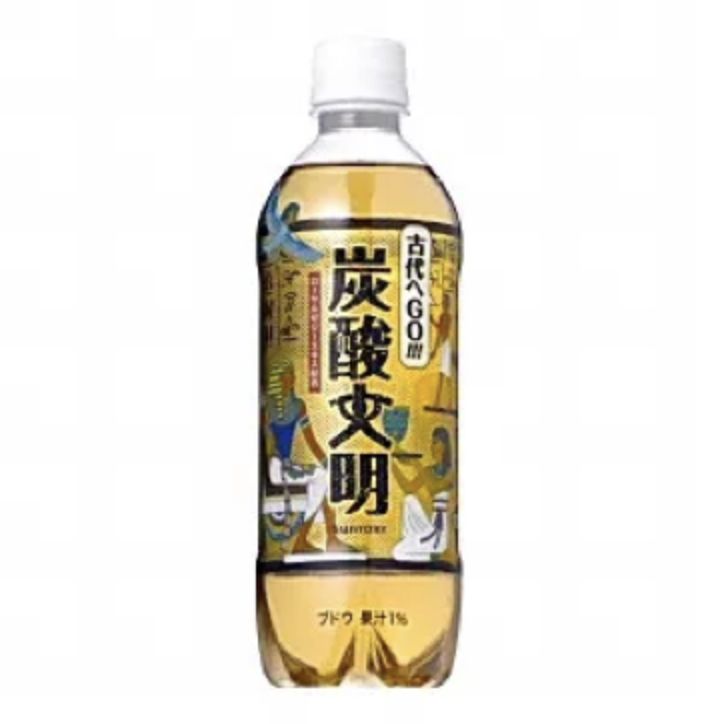
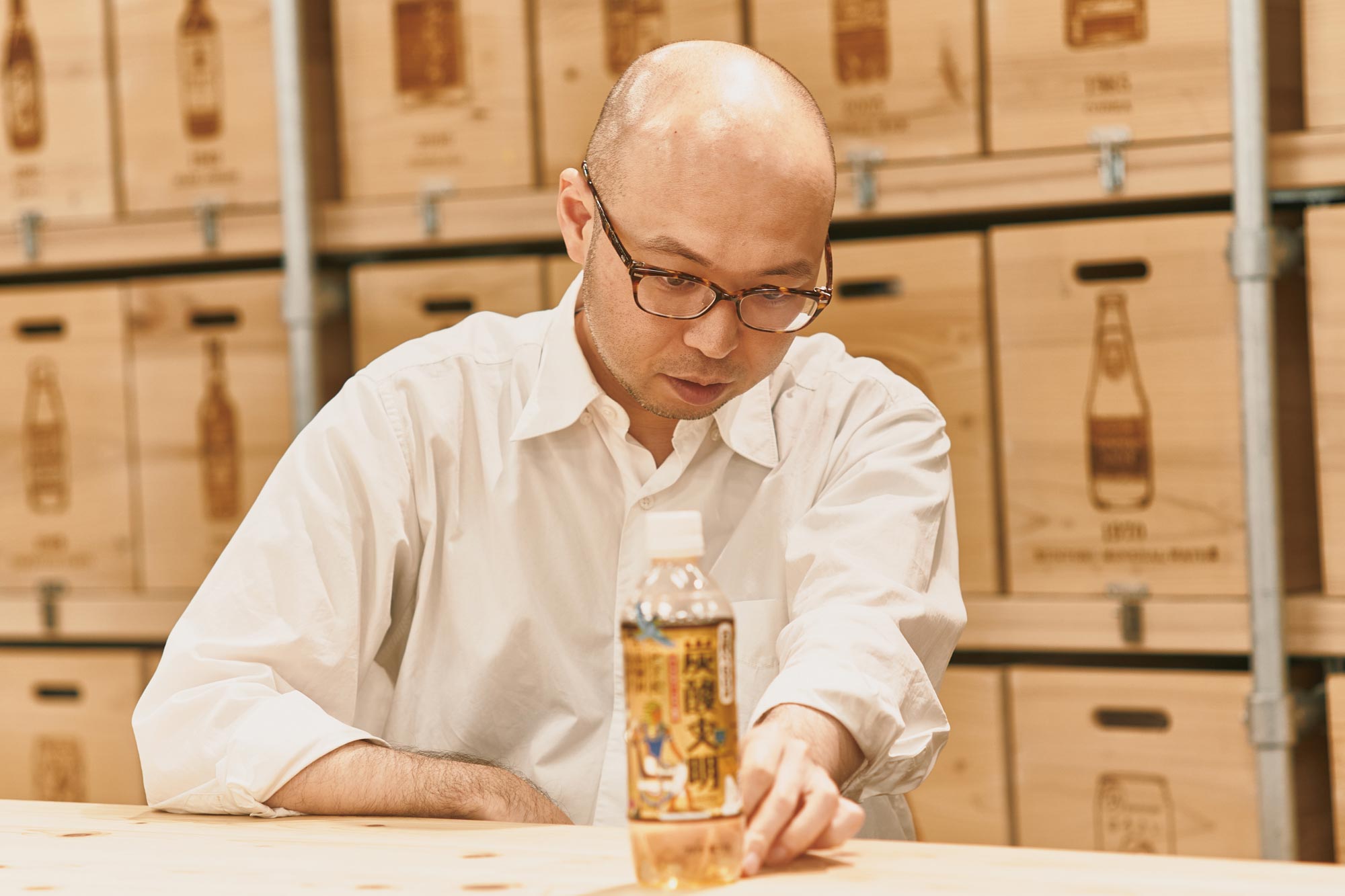
think the biggest reason was that I wanted to be there when the Design actually got decided upon. And I wanted to see what kind of role Design fulfilled in a big organization, and the processes that are gone through when creating a Design. So I thought, "It has to be a manufacturer.” I remember around the time I was quitting my former company that Suntory released a carbonated drink called Tansan Bunmei (lit. "Carbonated Civilization").
I remember that! It was written in ancient typography. That was a really unique product.
That's the one. So, I was drinking it at my old office when everyone came up said, "What on earth is that?!" "It's from Suntory? That's where you're going, right? Is that company okay...?" (laughs)
(laughs) Of course they'd worry. I heard the Designers consulted a renowned archaeology university for the package typography. They didn't want to make a fake!
For real? Wow... They sure do weird things here, and they go all the way.
The Initial Concept Never Makes It All the Way
Yes, Suntory does make a lot of unique products.
Maybe it's because we do Product Development in teams. Having Designers involved from the Concept level probably plays a big factor.
I think you're right. Elsewhere, I think most products start with a Brand Manager, who'll make a nice and tight Project Brief. Then they'll take it to their Design Department and say, "I want you to design something like this. Thanks!" And things progress from there. But here at Suntory, we have full-on discussions, with the whole team, from the very outset. Of course, the Brand Manager maps out a plan for the Product, and provides the focus point, the overview, the category, the characteristics, etc. They make a lot of suggestions, but we never just take it as it is. The whole team gets together, and we spitball, share our opinions, throw ideas around, and we hash it out... It's almost like we start off by each of us finding our own issues with the Concept.
The initial idea never makes it all the way through unchanged.
Since we all start off by finding our own issues, you really get the sense that you're actually involved in the process of making a Product. As Designers, we're not just "Designing the exterior of a Product," we're doing "Product Design. ” We're there, thinking about how we can enrich the lives of our customers, right at the highest point upstream for Production Development.
And how we actually reflect that in the Product's Design is our responsibility as the Designer.
Exactly. We're thinking, "How can we improve the quality of the product that reaches our customers?" As Designers, we're always aware that that's something we bear the responsibility for. The only thing that ends up in the hands of our customers is the physical product. Translating the Concept into a tangible form is where we get to show our skills as Designers.
Turn Failures into Stepping Stones!
That being said, the reality is that even after going through all those steps, we still don't know if it will be a hit or not...
"The Three in a Thousand Rule." Our market is so tough, it's said that for every thousand products that come out, only three are still around the following year. So, unfortunately, there are many failures...
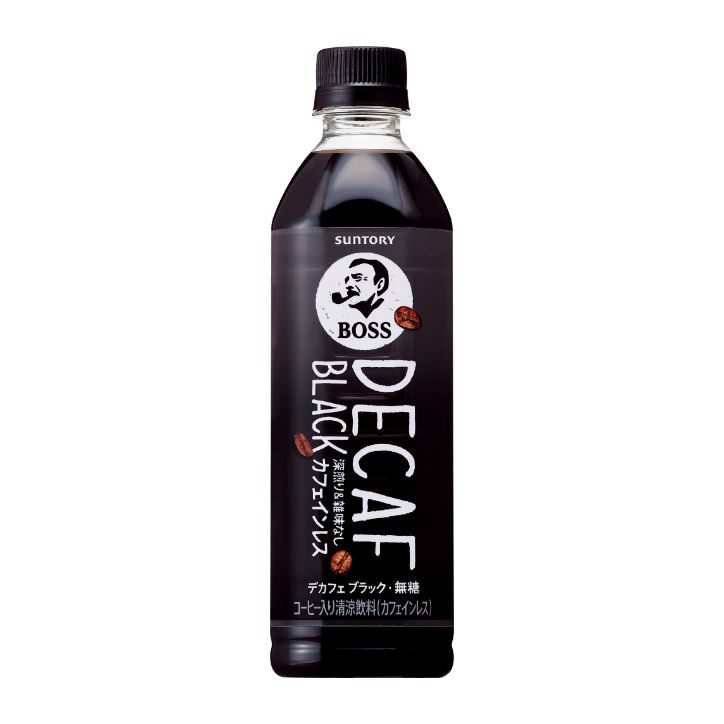
Not everything's gone smoothly for me either. For example, like with BOSS DECAF BLACK.
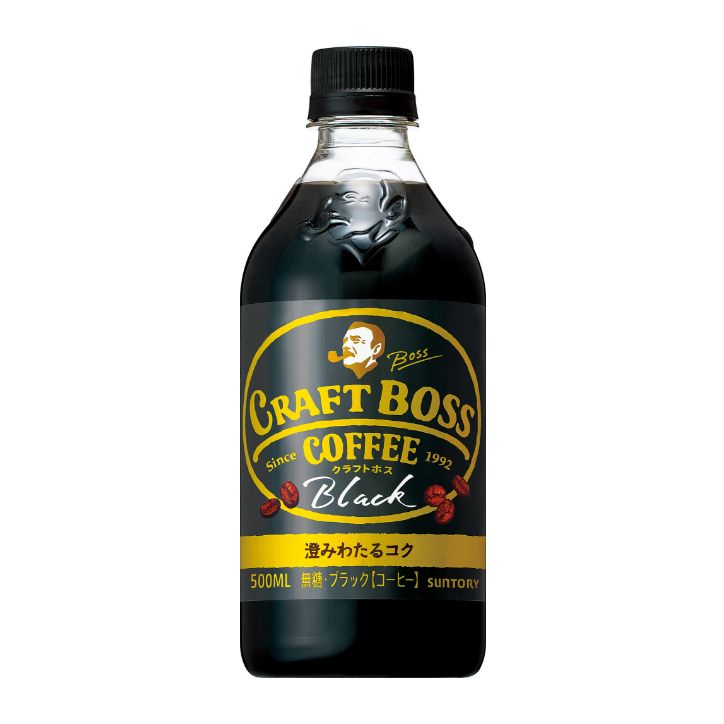
But without that failure, we wouldn't have had CRAFT BOSS, right?
Good point! With BOSS DECAF, the point with the design was that we wanted people to be able to feel a sense of the person who made it. Like the stuff you buy from a stall out in the countryside — what you see is what you get. When you buy "Granny's Homemade Pickles," they simply come in a jar with a sticker slapped on them, right? So, we thought of giving the package a clear label, in order for the actual contents to become the main character. But I didn't know too much about printing at the time, and we couldn't bring it out like I had envisaged. It ended up being a project that left me with a lot of regrets. However, the "unfinished business" I had there is what led to the realization of CRAFT BOSS.
What about you?
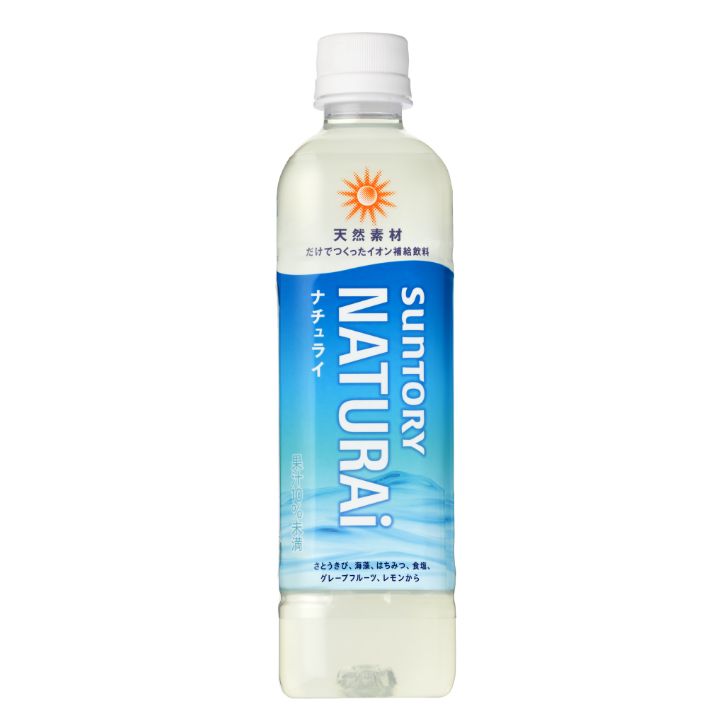
I'd probably say NATURAi. We billed it as an "isotonic drink made entirely from natural ingredients.”
That was when you'd just joined the company. We were always struggling in the sports drink market back then.
In-house, we were all excited — "This will finally beat our competitors!" But it failed so hard, it ended up being called "The biggest flop of the century." It was my first year at the company, and I went along with whatever I was told. Sometimes I was thinking "Really...?" as I worked on the Design. That was a project that left me with a lot of regrets.
But after that came GREEN DA・KA・RA, right?
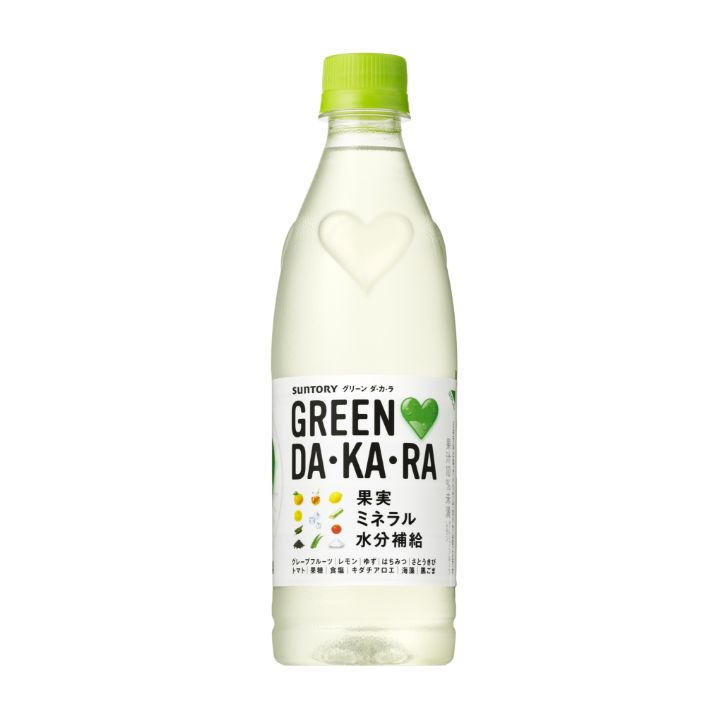
NATURAi wasn't selling well at all, so there was immediate talk of a renewal, but then it was decided we should look at natural ingredients again. So, we went all the way back to discussing exactly which target demographic would appreciate natural ingredients the most. And from there, we switched the target to "Parents and Children," and the Product Concept became: "Being there for families who sweat it out every day."
So, you relaunched as a sports drink, made from natural ingredients, for everyday consumption.
That's right. We used the idea that "Natural" = "Green," which seems a bit simplistic, but it's also an easy-to-understand symbolic word, and we came up with GREEN DA・KA・RA (lit. "Because it's Green"). The contents of the drink hadn't changed much, but before we knew it, we were selling 14 times more. That project was the one that made me realize "being tasty doesn't automatically mean something will sell well.” I got to experience how drastically things can change depending upon how the messages are conveyed, and how we create the value.
That's exactly what makes Product Development so much fun!
I think I was truly lucky to have experienced that so soon after joining the company. Especially after failing so badly. I was given another chance right away.
I think the fact we get so many chances to take a swing here is what really strengthens us. Sometimes you'll fail, and you'll be kept on the project anyway, and that can be really tough, but the joy when things finally go well is simply beyond compare.
In a way, that's one of the unique strengths of being an in-house Designer. And it certainly could be said that your CRAFT BOSS was a direct result of BOSS DECAF BLACK.
We Don't "Renew" — We "Revitalize"
Speaking of CRAFT BOSS, I have a little story to tell!
What is it?
When we did the first CRAFT BOSS, I made a slight alteration to the Old Man BOSS logo. I wanted to convey a sense of optimism, so I tilted his head upwards, making his gaze a little higher.
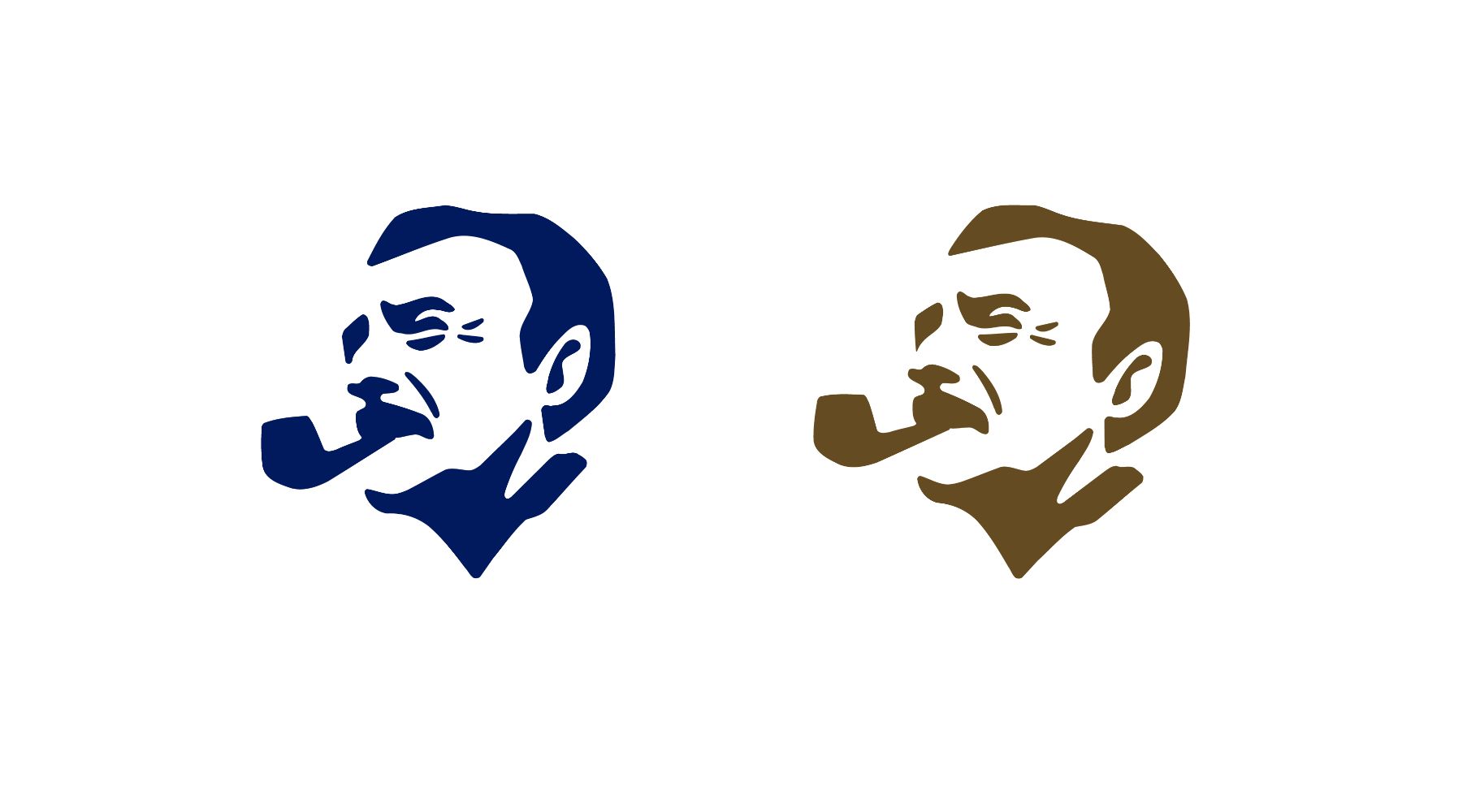
Left: Normal “Old Man BOSS” Right: 1st-Generation CRAFT BOSS “Old Man BOSS”
Wouldn't that make the Designer of the original BOSS angry?
Well, I was asked one day, a little while after it went on sale: "Did you change it on purpose?" But when I told that senpai, "Yes, I did change it on purpose," they just said, "Okay. If you went out of your way to change it, then why not?"
That was big of them! (laughs) Maybe that senpai even understood why you wanted to change it. They saw you had inherited the spirit of BOSS properly, and only made the alteration because you accepted the responsibility that came with it.
If that's what they actually thought, I would be super happy.
Sometimes the Designer in charge of a Product changes, but I think that also provides an opportunity to make a big change to the brand. Like with ALL-FREE. You changed it a lot when you were in charge. Adding all that blue, to a can that was so white.
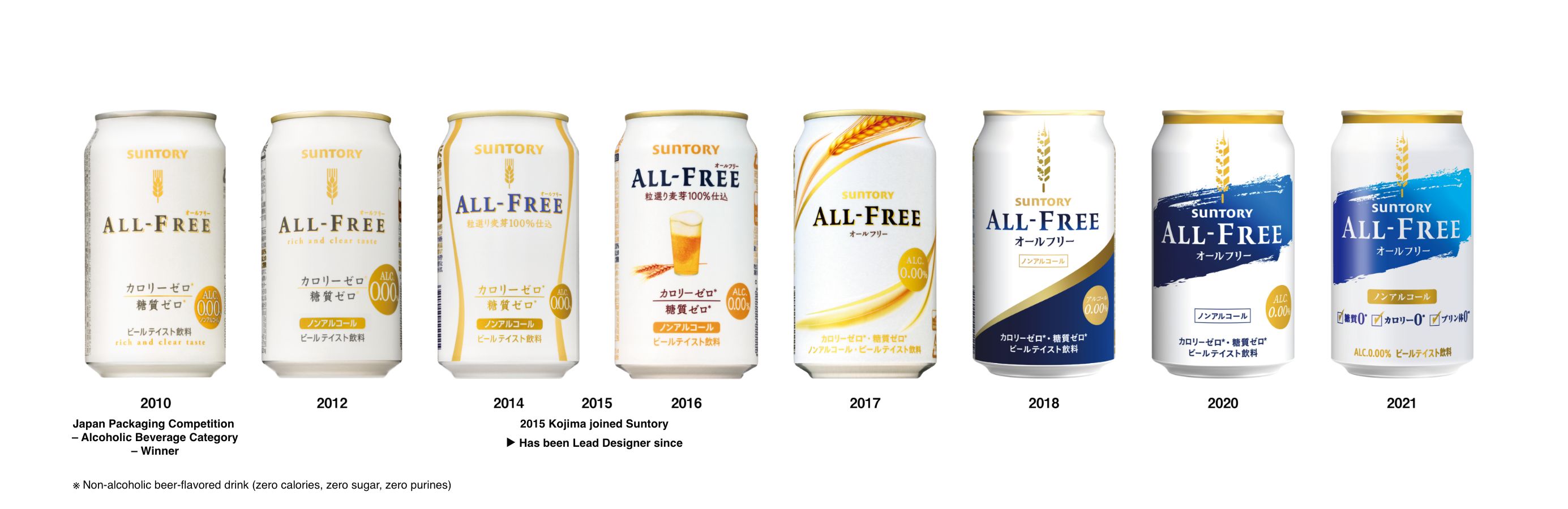
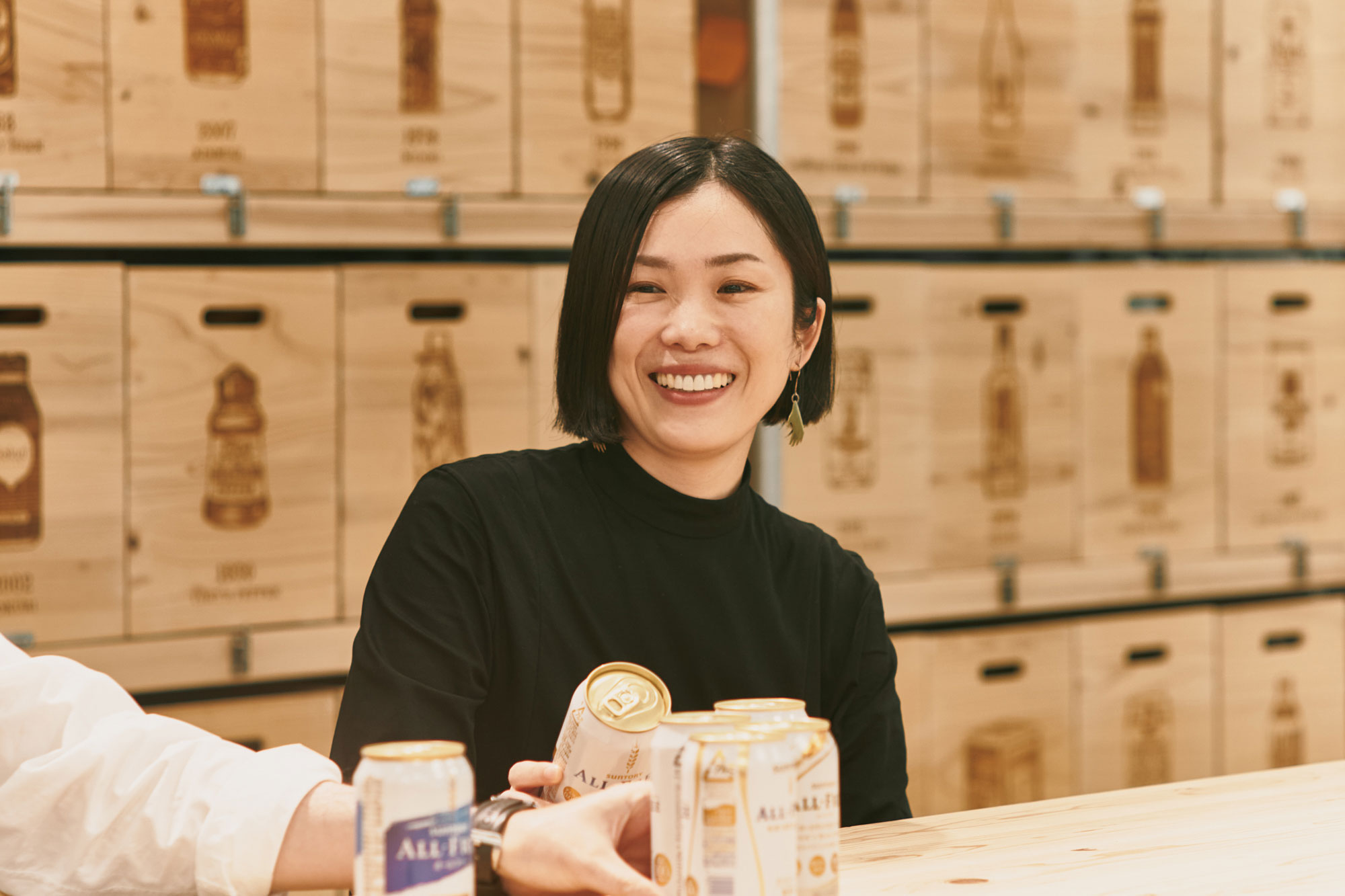
That really was a struggle! In the beginning, I was fixated on trying to make the brand color — the white — look more beautiful. I tried changing the ink, and the method of printing, and the design, while still using the gold and white colors. But then one day, I discovered something shocking in a consumer research report. Even the people who'd been drinking it for years hadn't noticed the changes we'd made to the design. It was a watershed moment. I thought, "As long as we keep using white and gold, I'll never be able to change the 'White Can' image of ALL-FREE."
As a Designer, that must've been a shock.
To be honest, I was like, "But I changed the design so much!" But as far our customers were concerned, that wasn't the case. So, I thought the first thing I needed to do was break free from the white and gold... But since white and gold were that deeply embedded in people's minds as the colors of ALL-FREE, if I wanted people to realize that something had actually changed, I needed to appeal to them with something that transcended logic. So, to make it clear that the design was indeed new, I added an element that would create a sense of incongruity with the ALL-FREE brand — the color blue. That's when the customers finally started saying, "You changed it. It's new." And to top things off, thanks to the addition of blue, the white started looking even more beautiful too.
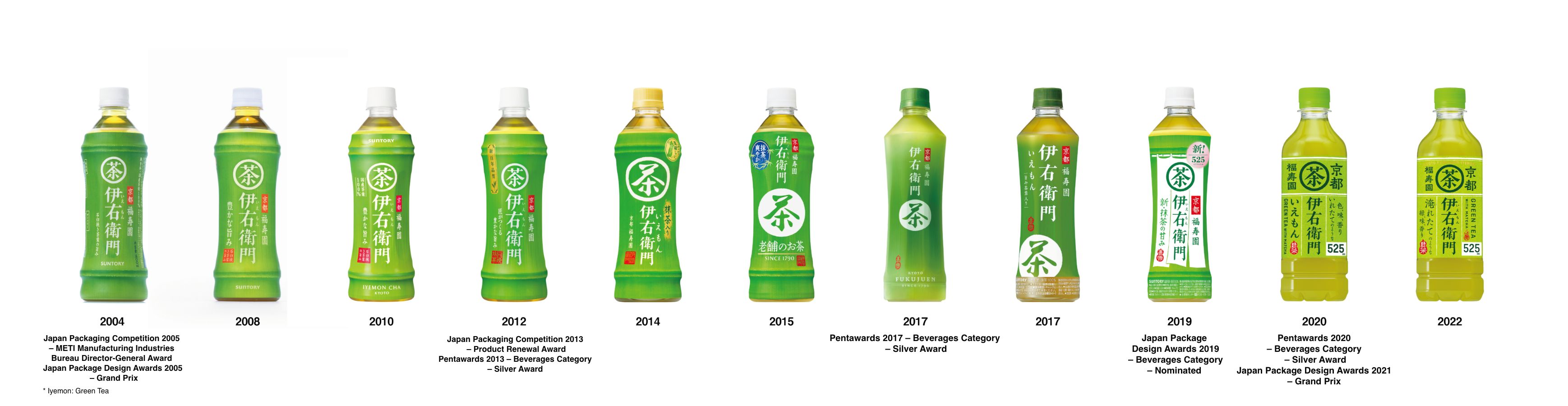
Maybe the process of changing things actually starts with us breaking free from our own biases. I experienced something similar when working on Iyemon. In 2020, I changed the shape of the bottle from a bamboo cylinder to one with rounded corners. And I changed the design of the label a lot too. However, the feedback from the customers was "Nothing's changed." From then on, we tried a lot of different things. But in the end, you have to break free from the preconceptions, like "ALL-FREE is White" and "Iyemon comes in a Bamboo Cylinder," otherwise you'll never make a new leap forward.
When it comes to redesigning, you always end up focusing on the earlier designs. You tend to rely upon the existing manual. But I think the most important thing is how you make the brand evolve.
You're right. At Suntory, we often call the act of changing the design not a "Renewal," but a "Revitalization." We breathe new life into the product. It's a rebirth. So, even when we work on the same brand, we get to face it with a fresh outlook each time, which makes it easier to get into a different mentality. And I think we can do that because, as Designers, we also ensure that the DNA of the brand's identity gets passed down too.
"Making People's Lives Better"
The thing that makes me the happiest about this job is when I see a tired-looking office worker putting a bottle of Iyemon into the pocket of their backpack. It makes me feel like I'm making someone's life a little bit better.
I know what you mean. When I'm at the convenience store, and our product is lined up on the shelf, and I see the customer in front of me take one, it makes me so happy. That's all I need to satisfy my need for validation. That's what I think makes this job so fun.
A little while back, we received an email at the Customer Support Center. It was during the COVID-19 pandemic, when every day was a struggle, and apparently the customer just happened to drink a bottle of Iyemon. When they removed the label as they were throwing it away, they found a "lucky cat." It brought them to tears. It made them think if they kept trying, something good might happen to them too. When I heard that, I thought from the bottom of my heart, "Wow, I'm so glad I did that."
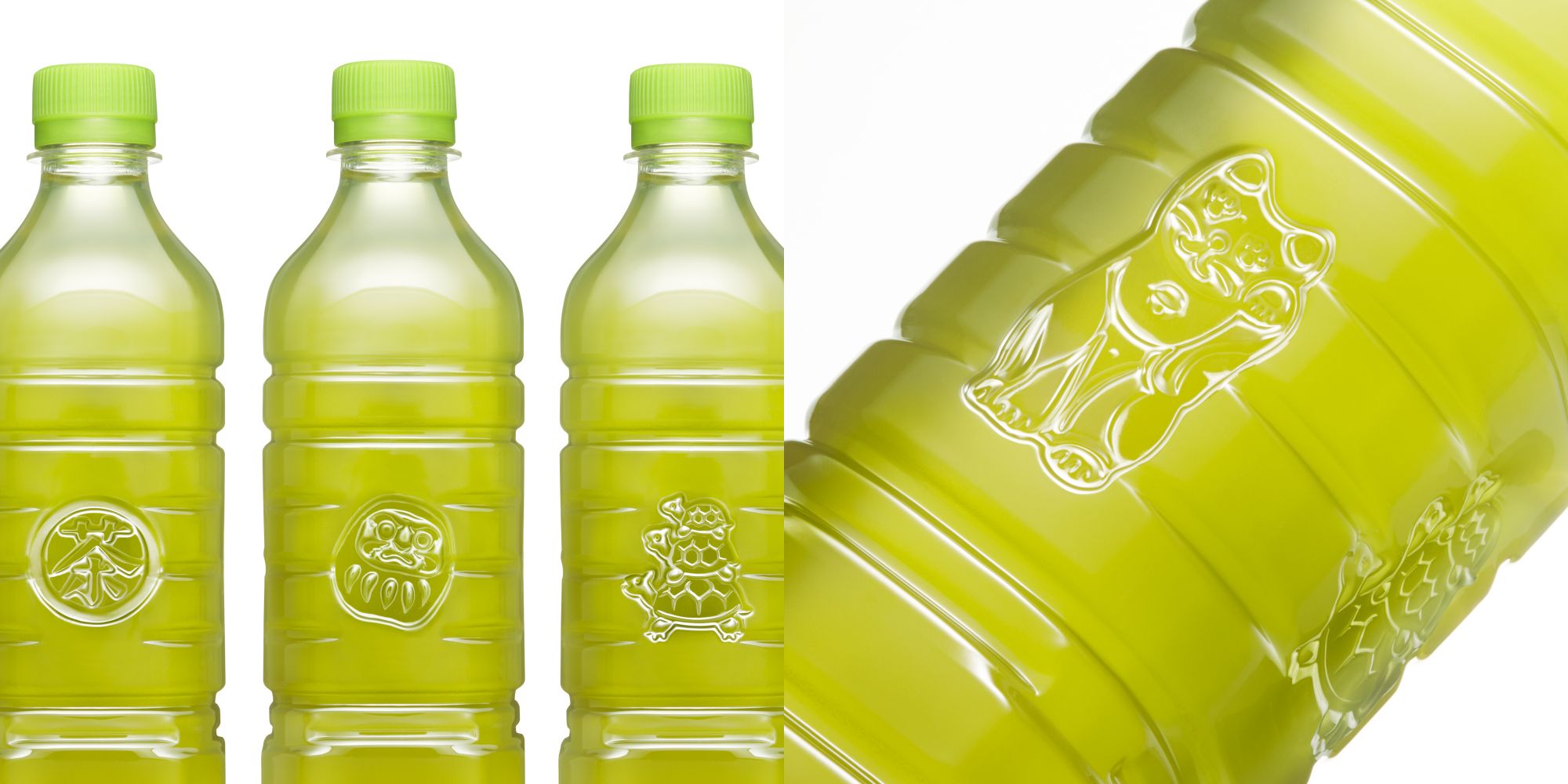
I think I know exactly how you must've felt. I think that's where the true joy lies in making a Product.
Being able to feel that you're making a difference in someone's life.
Exactly! That's what makes it all worthwhile!