DESIGNERS TALK 05
Talk to Learn, and Talk Once You've Learned
From Student to Professional — The Daily Lives of Rookie Designers
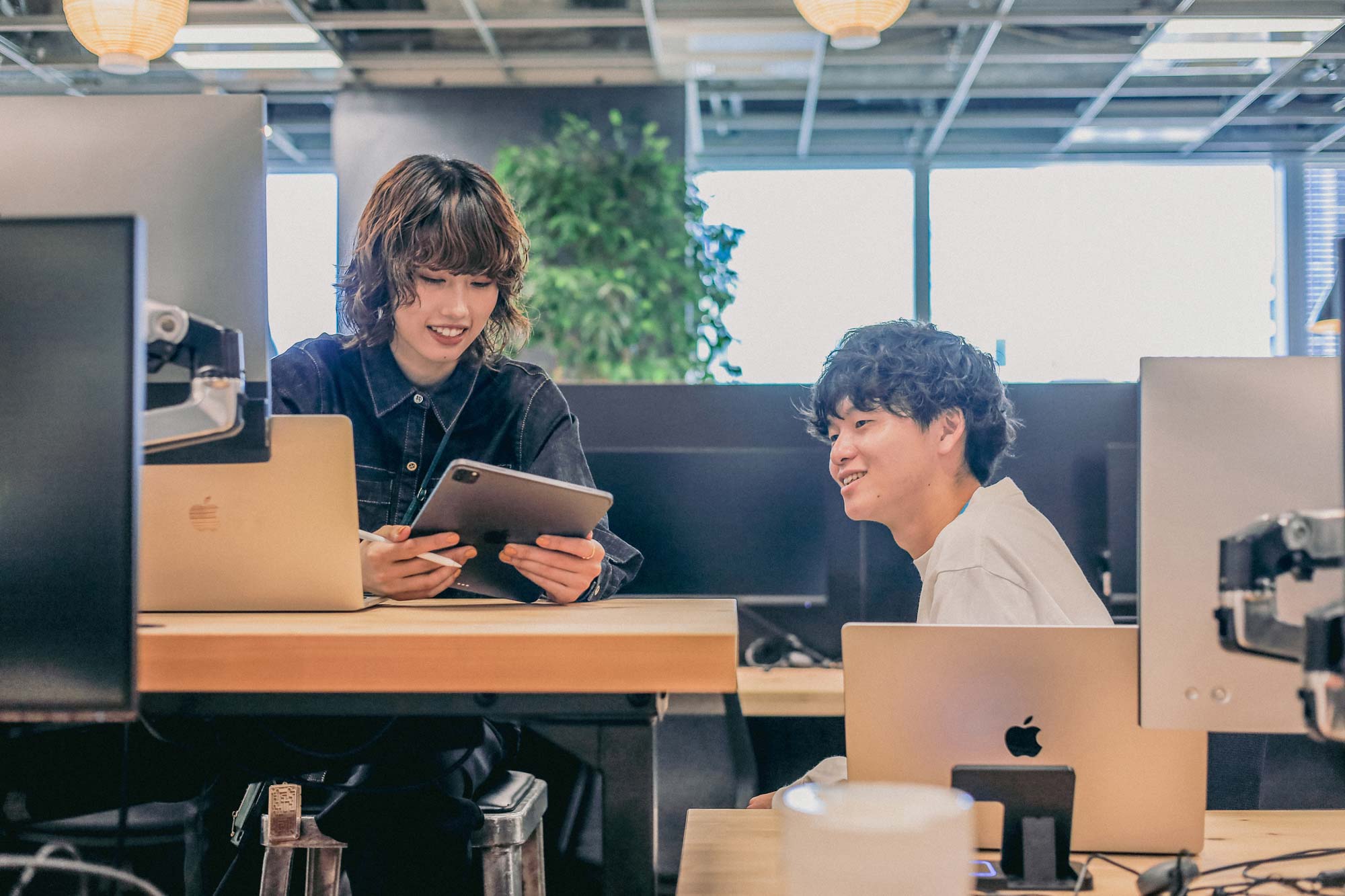
This is Miku's third year at the company, and Taiki joined just this year.
Their fresh eyes provide a different perspective of the Design Center.
In this brutally honest discussion about day-to-day work, they share all the surprises and excitement that come with being rookies, and an idea of
what it's like to be where Product Development actually happens.
Interviewed in 2023
Miku KIRIHARA
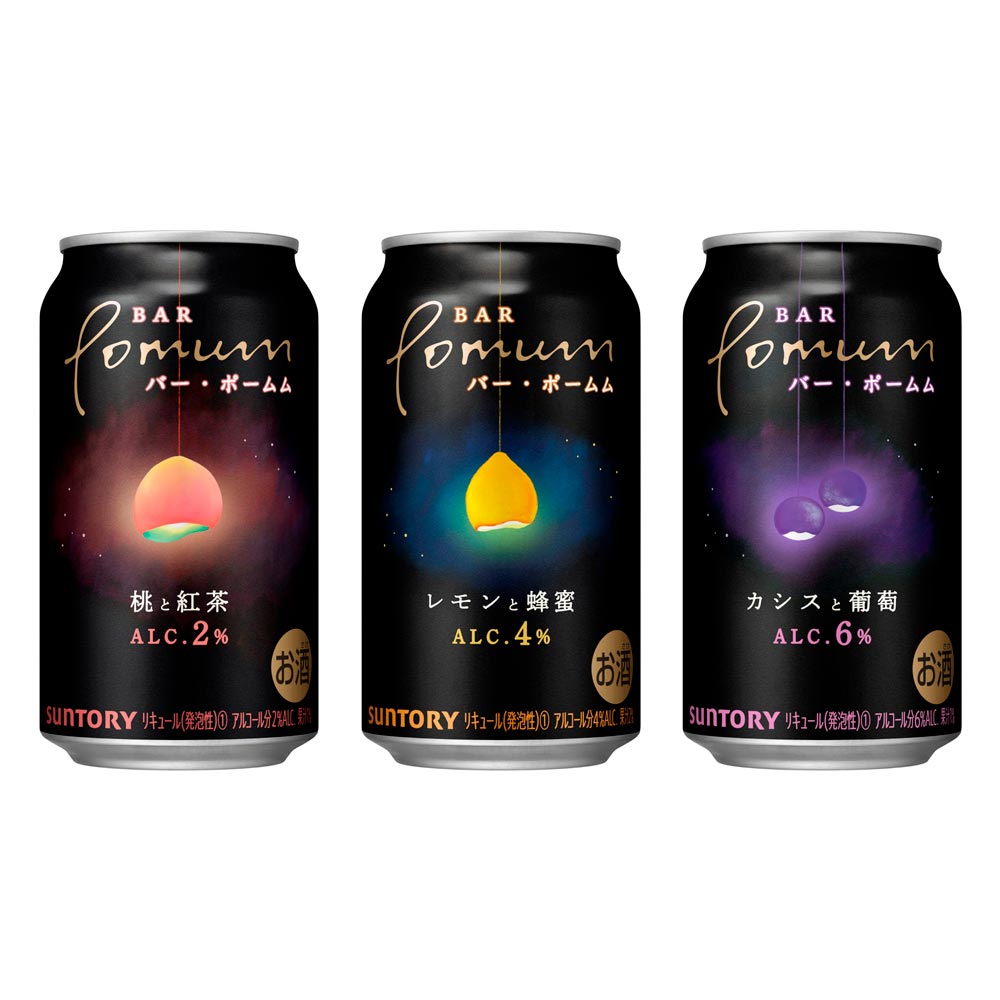
Joined Suntory in 2021 after graduating from Musashino Art University's Department of Visual Communication Design. Miku is in charge of products across a variety of beverage categories, including RTD (Bar Pomum and Horoyoi), Beer (Kinmugi Limited Edition Products), and Coffee (BOSS Cans).
Taiki YAMADA
Joined Suntory in 2023 after graduating from the Industrial Course at Musashino Art University's Department of Industrial, Interior and Craft Design.
Index
-
Talk Topic 1
TMW You See the Design You Just Worked On At The Store
-
Talk Topic 2
Assigned a 20-Billion Yen Project on the Third Day on the Job
-
Talk Topic 3
Everyone's Always Talking — Both the Veterans and the Rookies?!
-
Talk Topic 4
A Serious Commitment to Fun
-
Talk Topic 5
I Started Looking At Things Differently...
-
Talk Topic 6
"I'm Useless at Talking..."
-
Talk Topic 7
In The Beginning, Design Had Words
TMW You See the Design You Just Worked On At The Store
So, why did you want to join Suntory?
Because I wanted a job where I could create the entire world of a brand.
Okay. Does that mean you wanted to design all of the Customer Touchpoints?* You wanted to do Branding? *Customer Touchpoints: Any kind of interaction or point of contact between a brand and a customer that is formed throughout the entire customer journey. These can include social media ads, experiential campaigns, and the package of a product as seen on a store shelf.
Something like that! I studied Product Design at university, and that's where I came to understand that products have a
function before they have a design. Like, the inner mechanisms and the outer design of a product are strongly intertwined.
So, I gradually started thinking that I didn't simply want to work on the design of a product, but that I wanted to design the
whole world of it. I wanted to be in a position where I'd be contemplating how a product might make its user feel.
That's what led me to seek a job where I could be involved in creating the fundamental concept of a product, and its entire world.
I see. But if you wanted to do Branding, why not go to an advertising agency? Why join a manufacturer, and a beverage maker at that?
Beverages are a part of everyday life that we have a really close relationship with, right? When I imagined bringing joy to so many different people, and how happy that would make me too, I thought that sounded awesome.
It sure is. So, you gave things a lot of thought before you started looking for a job?
I did. Don't be deceived by my looks. (laughs) So, why did you join Suntory?
Like you, I wanted to work in the fundamental areas of Design, and I wanted a job making things that made people happy.
I didn't have any particular field in mind... I think I chose Suntory in the end because the atmosphere and environment
here were so appealing.
Oh, me too! When I was looking for companies to apply to, I took the Suntory Design Center's online orientation,
and the way the presenters chatted back and forth, it sounded just like a radio show. The vibe was super free and fun.
And the words in the Corporate Philosophy struck a chord deep inside of me too: Yatte Minahare.*
It seemed like this was a place where I'd be encouraged to be myself all throughout my pursuits.
* Yatte Minahare: A favorite saying of Suntory’s founder Shinjiro Torii, this colloquial phrase embodies a deeper philosophy than
the direct English translation “Go for it” conveys — it reflects how we refuse to fear failure, refuse to give in or give up,
and we stay relentless in our quest to innovate new values.
What's it like now that you actually work here?
Firstly, every day is just so much fun. And I'm also a whole lot busier than I expected... We're always working on a bunch of different projects simultaneously, right?
That's true. We all have a number of projects to work on at once.
You get told, "Come up with something for this by whatever date." "We need ideas for the design by whenever. Thanks!" It feels like there's constantly a horde of things rushing towards you all at once... Back in university, all I had to do was focus on each project as it came, but here I have to pick up new ones as I go, and keep running.
The actual work isn't just limited to Product Design either.
Even for a rookie like me. The projects I'm in charge of now vary from Product Design to Service Design Development. The range of the work is just so broad, I'm constantly having to switch my brain from one mode to the next, and keep it running at full capacity... I sure have a much better idea of the scope of work that's required of us now! (laughs)
We don't just think about the Design of each of our Products — we also need to come up with ideas about how to deliver and convey them too. The concept of Design entails a lot of things here.
So, it's tough. But the tougher the work is, the more rewarding it becomes. And I've only been here for three months now, so I haven't experienced it myself yet, but I'm sure it's going to be so exciting when a product that I've been involved with actually gets released to the world...
Let me tell you, it's an incredible feeling! It's always super exciting, and it makes you truly happy.
So, what was your first project?
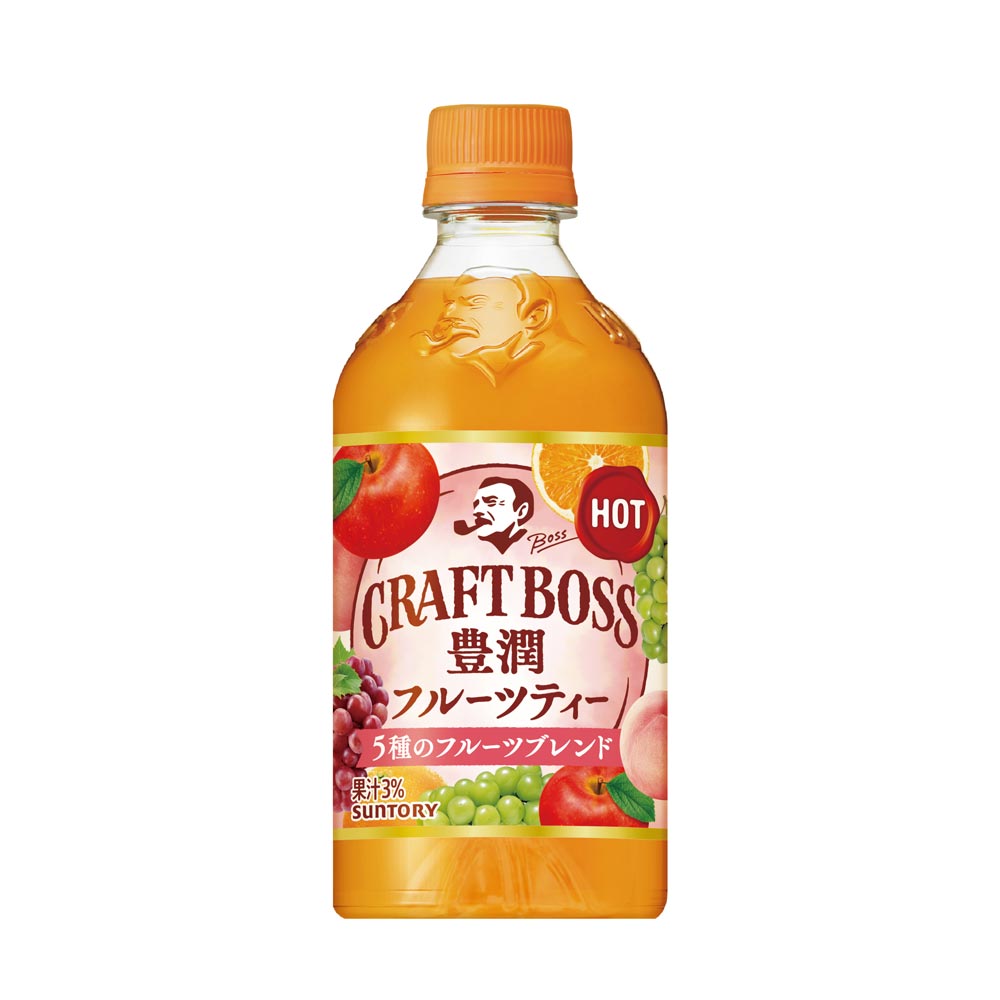
CRAFT BOSS FRUITS TEA.
When I joined Suntory, back in 2021, we were still in the middle of COVID-19, and it was like I went straight from
my university graduation ceremony to being a professional designer, before I even knew it! So, my head was still in a bit of a
bubble when I began work on my first project. And even after the Product actually went on sale, it still didn't feel real,
despite the fact it was the first one I'd ever worked on. When I saw it on the shelves at the convenience store, all I thought was,
"Hey, I was playing with the data for that on my Mac just the other day..." (laughs) But then I started getting messages from
my friends: "I saw it." "I drank it." "It's really good!" And then it finally hit me — "Making something that ends up in other people’s
hands really is fun." "Wow." And that's when the joy slowly started washing over me.
Assigned a 20-Billion Yen Project on the Third Day on the Job
So, look forward to the day that the Product you're now working on arrives at the stores!
I can't wait. But I'm kinda nervous too! (laughs)
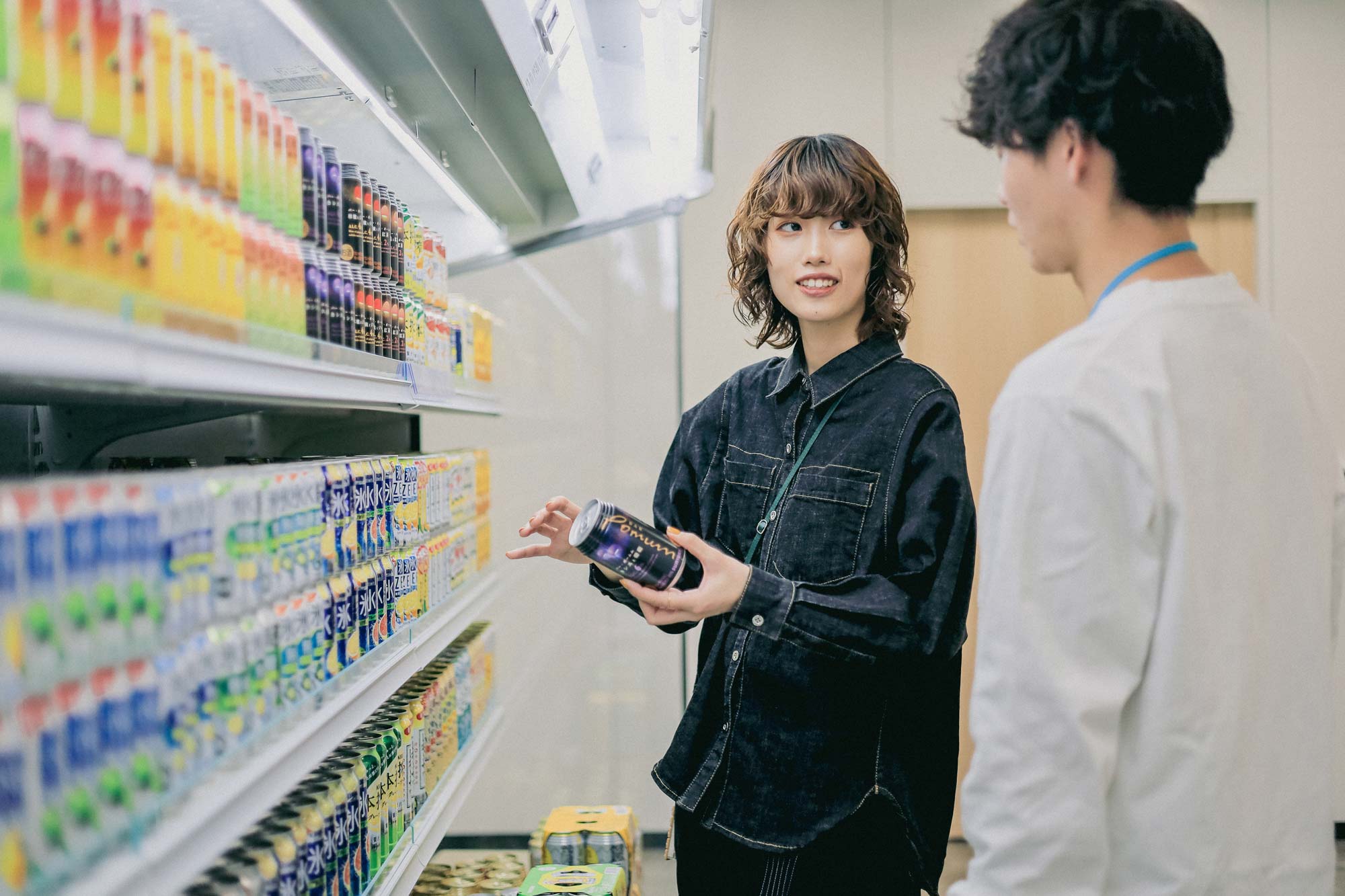
Even rookies who've only just joined the company get to work on Products that go on sale right away. You get to be in charge of projects that are actually scheduled for a release, and I think that's very typical of the way we do things — there’s plenty of hands-on learning.
My third day here, I was called to a meeting about a project I was to be in charge of, and the first thing they said was, "This is a project that's going to have a 20-billion yen economic effect." I was like, "What?! I've only been here three days! 20 billion yen? Are they serious?!" It was so big, I just couldn't even.
A natural response. (laughs) When I was told the product I was working on would be going on sale at convenience stores and supermarkets nationwide, I was like, "N-n-nationwide...?!"
I was totally expecting my first task as a rookie designer to be like, "Here. This needs cutting." Or "Photocopy this for me."
...That's some stereotype. (laughs) I guess you expected to serve as more of an assistant to an established Designer, and slowly learn the ropes from them, before you got to actually start working on projects full-on. But the reality is, learning and working go hand-in-hand here.
Right? And I was also surprised at how compact the project teams are.
Valid point. Sometimes we only have 5 or 6 members on the team, even when we start working on a project from the Product Development level, and that's including people from all the other departments.
I thought Suntory was like this mega-corporation! I assumed that every time they tried to develop a drink, they'd hold big, long meetings in a conference room, with a huge table in the middle and two dozen people seated around it. But we actually form tight teams and make really rapid progress. And there are only one or two Designers on a team.
I think the standard team has two members from the Design Center: a Design Director and a Designer. And they're usually a senpai (senior) and kohai (junior) duo.
So, as you work with your senpai, you really are learning on the job.
Everyone's Always Talking — Both the Veterans and the Rookies?!
I really appreciate how everyone comes up and talks to me all the time, both the senpai that I work with directly, and those that I don't. They'll be like, "Guess what happened to me yesterday?" or "Wanna grab some lunch?" They're less "senpai", more "friend you feel completely at home with." So, before I even realized it, it felt like I already fit in here.
It was the same for me. When I first got here, I'd been thinking about things too much, and had made myself all nervous. I thought I had to show everyone how unique I was. But after speaking with all the senpai, and actually being able to do so as a peer, I started thinking, "Oh, it's okay to just be me." There's an atmosphere here that really encourages you to just be yourself.
Everyone here's always babbling away... I mean, it never goes ghostly silent. I thought offices were places where people sat down at their computers and focused on getting their work done...
You and your stereotypes... (laughs) It is the total opposite of that image here. Even when you're assigned to a project, rookies have a Coacher* to talk to too, so it's like you're always communicating with someone. *Coacher : At Suntory, new hires are paired with experienced Designers for their first year. Coachers provide help with design work, schedule management, and any other issues that may arise.
It is. To be honest, I'm still at the stage where it's all I can do just to try and keep up. But even with someone so green as myself, nobody has ever just come out and said something negative about any of my ideas. Instead, I get a lot of positive advice, like: "Maybe if you tried something like this, it would be even better!"
Right. People take your issues to heart here, and they try to think them through together with you. And there are plenty of hints to be found in the conversations that you have. Our senpai are all very unique people themselves, so they each have different opinions, and different ways of doing things...
What kind of Coacher did you have?
Well, he was a very passionate person. For lack of a better expression, I might say that he was a "Showa*-esque guy."
A "Showa*-esque guy"? *Japan's Showa era lasted from 1926-1989, but references most commonly pertain to the post-war economic growth period, and evoke images of a more traditional work ethic and morality. The context here is akin to Miku calling someone a "Boomer."
I mean that in a good way. (laughs) Whenever we had a discussion, he'd be very casual and open, but he'd get really invested in it too. All for a young Gen-Z girl who didn't know anything about anything yet. When it came to the designs, we had a whole lot of very heated discussions. But after going head-to-head with someone of a different age, with a totally different way of thinking, I was able to appreciate a wider range of values, and there were plenty of interesting discoveries to be made too.
You sound like a great duo. I can imagine that being a really stimulating experience!
At the end of the year, my Coacher said to me, "You helped me realized so many new things." And it actually made me really happy too... I'm sure we both ended up motivating each other. We partner with a different senpai for each project, so you might go through a bunch of fun experiences like that yourself!
A Serious Commitment to Fun
Being in a senpai-kohai relationship where you both motivate each other sounds really nice. From us rookies' point of view, the fact you get to partner up and work with a different senpai for each project means you get to learn a lot, and more than that, it's fun!
Having fun is crucial. You could say the main purpose of design is to bring joy, and the core element of that is a desire to entertain, and that's one thing I think everyone here possesses a lot of. For example, we have social functions at the Center four or five times a year, from welcome events, to farewell parties, to end-of-year bashes. And we all take turns being in charge, from the rookies to the veterans. Of course, your senpai are busy too, but when it's their turn, they do the scheduling, plan a hook for the event, decide the entertainment, and actually produce it all too. The way they obsess over the details ensures we have great fun each time, and I actually find it amazing. (laughs) I think it boils down to the fact that everyone here likes people, and also likes entertaining them.
I think I'm up next to organize the end-of-year party... I'm not so sure I'll be able to make it fun... What am I going to do? I should start thinking about it now.
I'll look forward to it. (laughs) I think the most important thing is to have fun yourself!
I Started Looking At Things Differently...
Ever since I became a Designer at Suntory, I've started looking at things differently. I even take notice of the vending machines* on the side of the street. It's changed my way of looking at a whole range things. *Japan boasts an exceptionally high density of beverage vending machines, making them a ubiquitous part of the landscape.
I know the feeling! When I go to the convenience store, I'm always looking to see what kind of drinks people are buying.
I even look to see which maker the vending machine belongs to, and what kind of drinks are in the lineup.
Back when I was a student, I had no idea that each vending machine belonged to its own beverage company...
When your environment changes, your consciousness and perspective change too, so even when you look at the same thing, it can appear different. I remember watching one particular anime twice — once before studying art at university, and then again after — and it seemed like a totally different series. I was suddenly going like, "How did they create that angle?!" "The level of craftsmanship in this anime is unreal!”
You're right. I've even started thinking about what must have gone on behind the scenes during the development stage for all sorts of different products.
That means you now look at things from the creator's point of view. But the consumer's point of view is important too. In all of my daily work, that perspective is one thing I'm always conscious of, and one I must never let slip.
It sure is important. As for me, since becoming a professional... You could say I've definitely evolved, maybe...
I'm sure you've matured a whole lot without even realizing it!
I'm not so sure. I've still got a long way to go. There have been meetings where I couldn't even say a word, and since I don’t
understand the technical terms, and have no idea about the marketplace, I often just sit there listening the whole time.
Everyone speaks so incredibly fast too. The words fly back and forth, and while I'm caught there thinking,
"Huh? What does that mean?" the conversation just steams on ahead without me...
"I'm Useless at Talking..."
Back when I was in university, I actually thought I had great conversational skills. Then I joined the company, and one week later, I was in total despair... I finally realized my own impotence. I thought, "I'm useless at talking..”
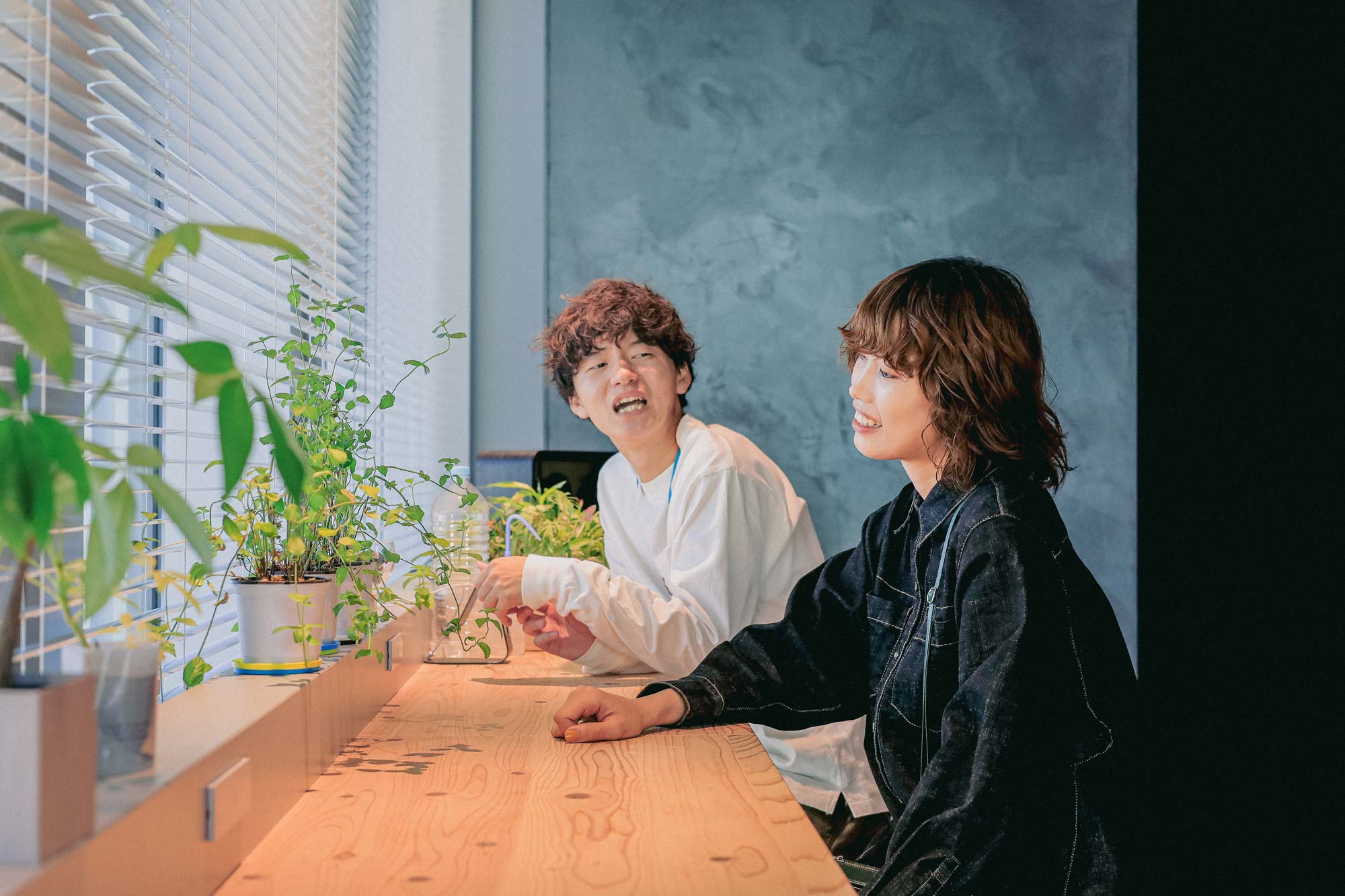
Back when I'd just joined the company, there were times when I wasted everyone's time by talking nonsense during a meeting, just because I thought, "I have to say something!" You want to convey what you're thinking, within a limited time frame, in an easy-to-understand manner, but I think that takes training.
It feels like our senpai have everything in their heads all logically organized — like how they feel, and what they want to actually express. Up until now, I'd always just kind of let words flow from my mouth, hoping they'd convey what I felt. But I realized my senpai actually have a proper understanding of their own thoughts.
In The Beginning, Design Had Words
It doesn't just come in handy during discussions. You want that ability when you're working with your hands, trying reflect
your ideas in the design. There's meaning, and a background... And it's very important to be able to verbalize everything.
And it doesn't just enable you to convey thoughts, but it also enables you to confirm for yourself the core elements of what
you intend to express.
It's so difficult, but it's super important.
I actually struggled quite a lot myself when it came to verbally explaining my own design work. Like in my first year here, when I was working on Product Development for BAR Pomum. To start off with, I was completely clueless about the market for alcohol.
That sounds like a crisis! What did you do?
My senpai squeezed it out of me. They kept asking me "Why?" Over and over again. Then, as I kept trying my best to answer,
it started to feel like I was being trained to think about things in terms of Objectives. The expression is just a Means.
The important thing is that which you aim to achieve — the Objective. But at the time, I was like, "Why don't they
get what I mean?" I was so frustrated and disappointed with how bad I was at putting things into words.
Wow.
But thankfully, that helped me realize something. Before you try conveying anything to someone, you need to have a clear understanding of your own thoughts on the matter first. So, I started thinking about things from a birds-eye view: "What was I thinking when I did that?" "What was I actually trying to do there?" And through doing so, I started to see what was actually at the core of my ideas.
So, the important thing is what's behind your senses... And you need to put it into words?
Yeah, something like that. I'd say that putting thoughts into words really takes practice. But once you figure out how to do it, it can be really handy when looking for ideas for expression. You start to see where the core of the concept lies.
I see... There's another reason why looking for the right words is important...
When it comes to making Products at Suntory, I think you could say that everything starts with words.
And once you find the words, you start to see the picture?
Exactly! That's why we spend so much time on words when we have discussions for Product Development. To create the taste, and create the expression, we have to go through a process of taking explicit key words, and elevating them into more abstract words that portray the fundamental value. Once you know how to look for words, I think you'll be able to speak more actively at meetings.
I see. That all sounds difficult... But I guess the first step is to start putting as much as I can into words, and keep on talking! I'll start from there.