DESIGNERS TALK 02
What We Have Here is "A Culture of Chaos”
The Chaos is What Makes it Great
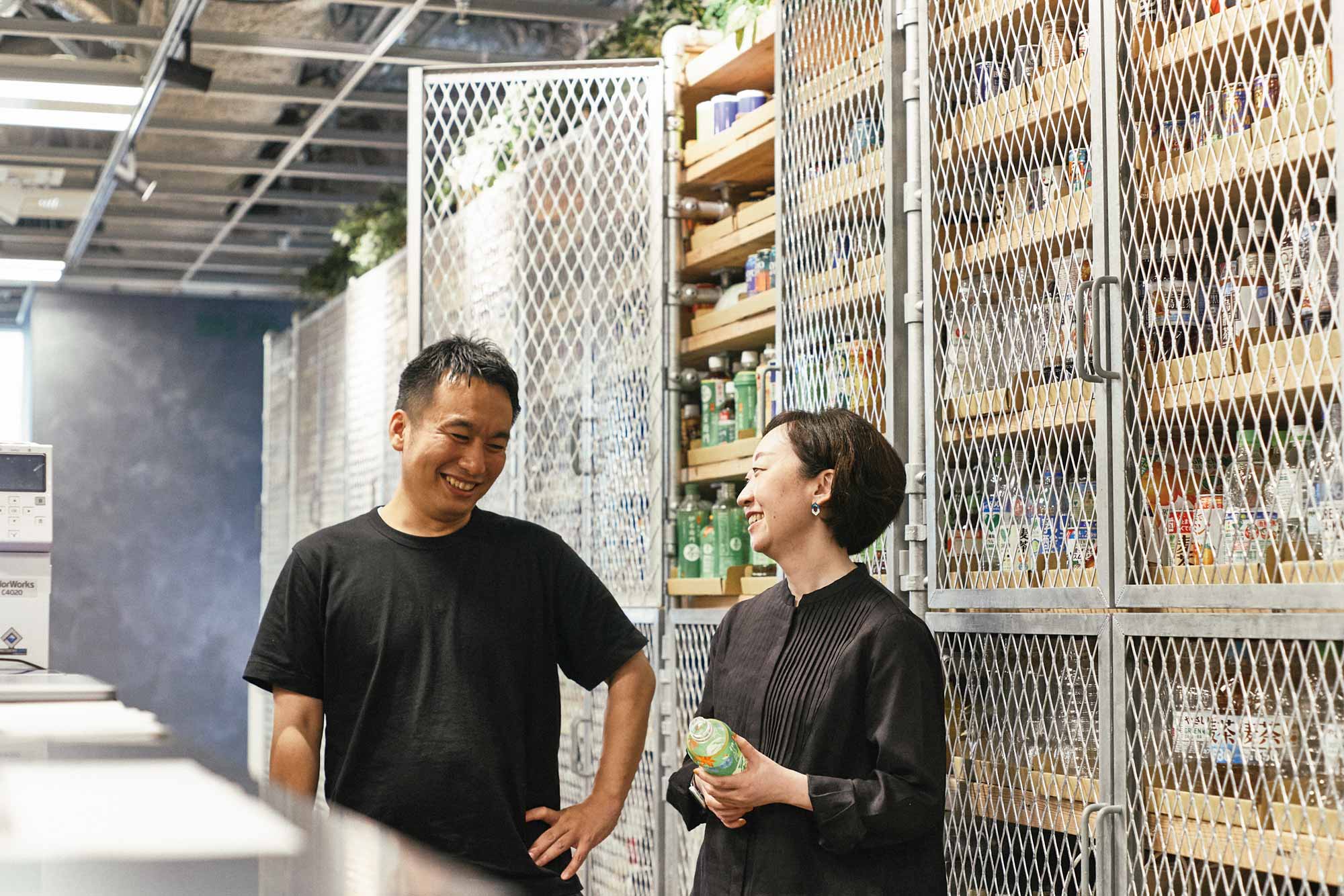
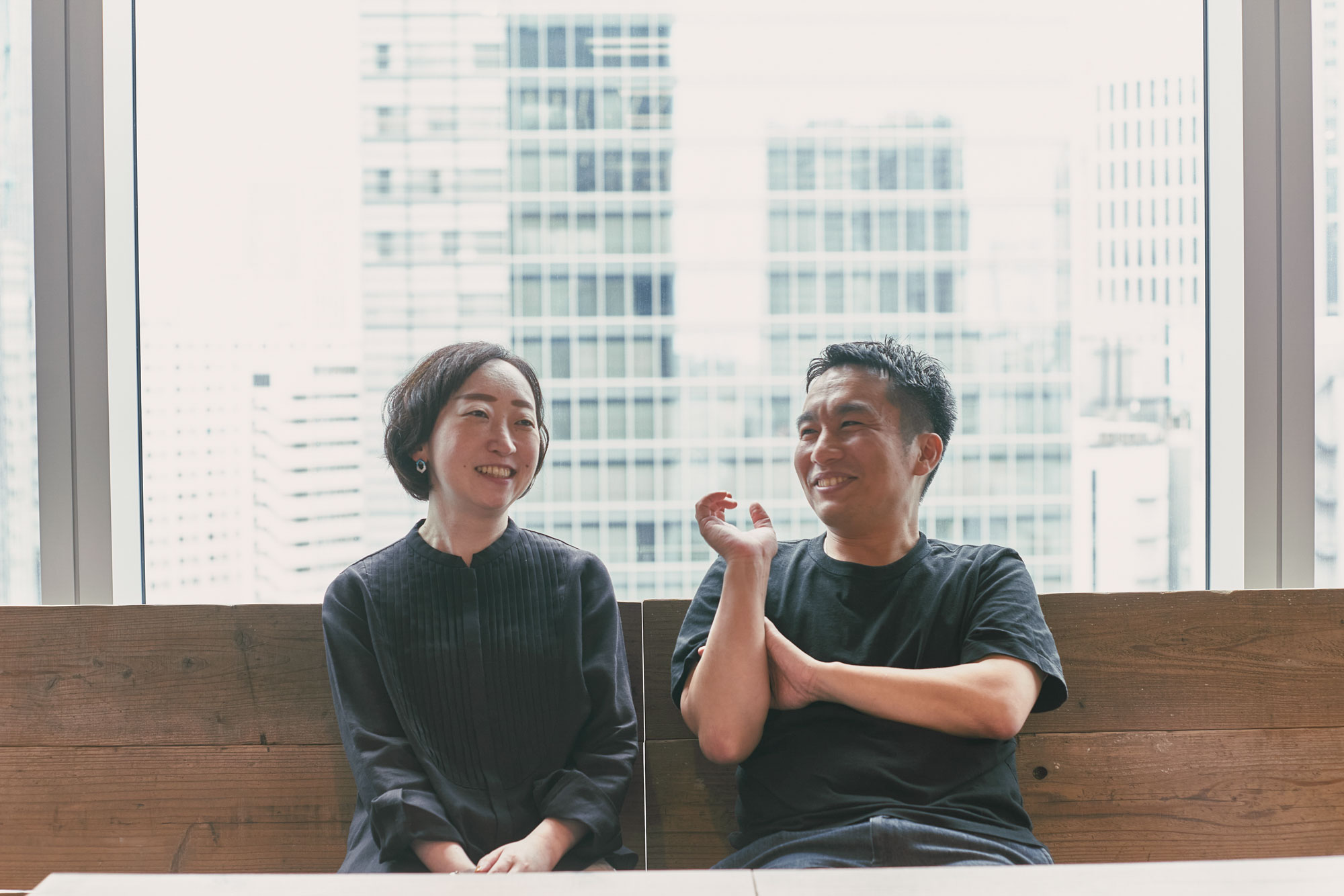
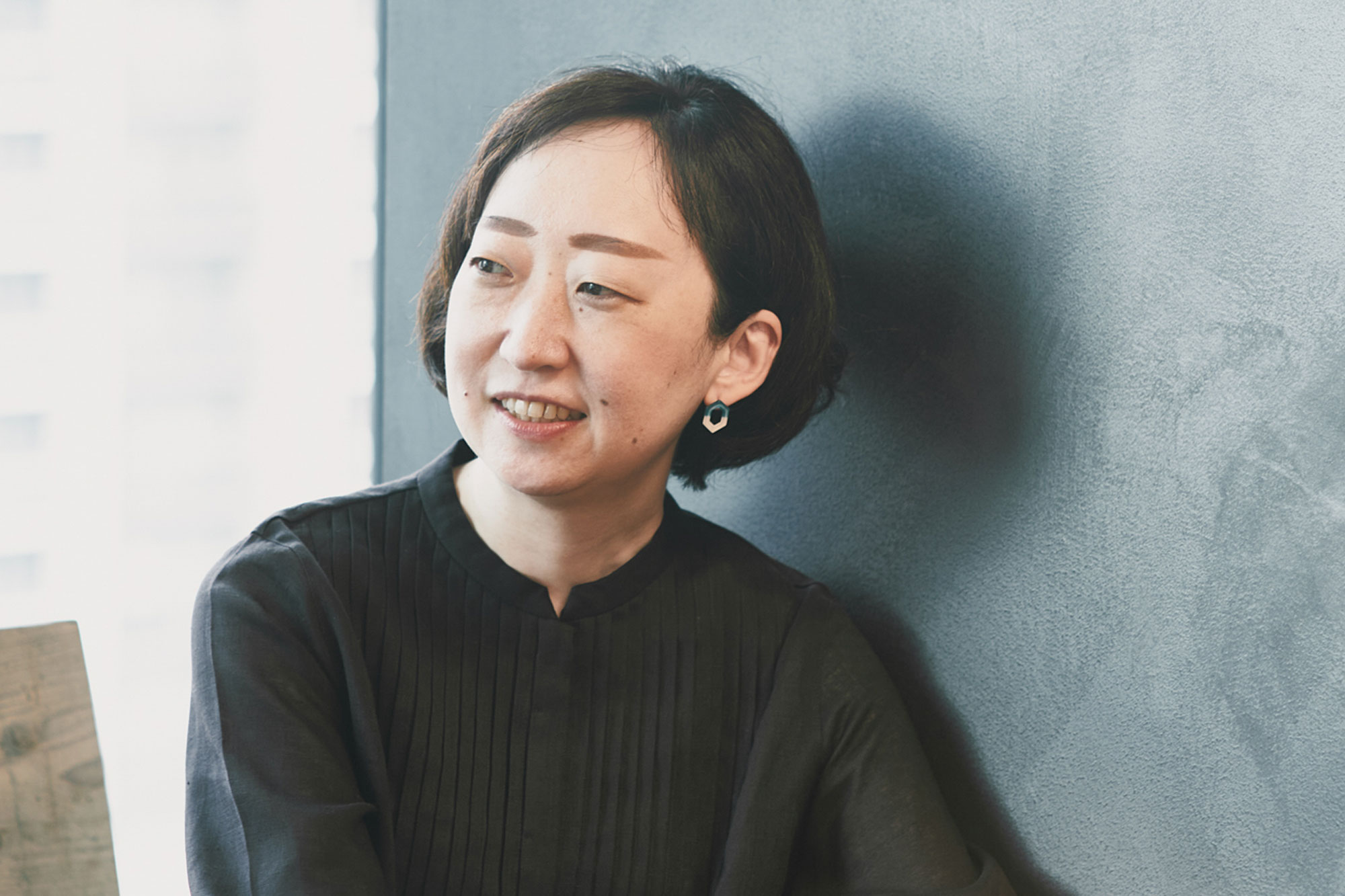
Akiko, as the current Center Chief, has seen the Design Center change and evolve firsthand. Takashi, having led somewhat of a unique career, has gone from being an industrial designer with an electronics manufacturer, to working at Suntory's Marketing Department, before joining the Design Center. The two shed light on what the organization is like now.
Interview conducted in 2022

Akiko KIRIMOTO
Joined Suntory after graduating from Tama Art University's Graphic Design Department.
Having worked on the renewal of Suntory Oolong Tea and other sugar-free teas including
Iyemon (Green Tea) and Tokucha (FOSHU* Tea), she has also been involved in the development of
Functional Beverages, Global Products, and Alcoholic Beverages such as Chu-hai.
As Design Center Chief, she is currently responsible for department management and the overall supervision
of Product Design Development.
*FOSHU = Food for Specified Health Uses

After graduating from Design Science Course Graduate School of Engineering Chiba University, he began working at a precision equipment manufacturer where, as Product Designer, he designed such products as printers. He then joined Suntory Beverage & Food, where he worked in the Marketing Department for 4 years. After transferring to the Design Center, he was involved in the Product Development of products in the Wellness category. Having since transferred back to Suntory Beverage & Food, he currently works in Business Strategy operations.
Index
-
Talk Topic 1
What It's Like at the Design Center
-
Talk Topic 2
"A Watering Hole in the Middle of a Savanna"
-
Talk Topic 3
At a Glance, It Looks Like a Mess, But Actually...
-
Talk Topic 4
There's Nothing Wasteful About Waste?
-
Talk Topic 5
What the Team Needs From a Designer
-
Talk Topic 6
The Shopping Arcade Full of Unique Characters and Warm Friends
What It's Like at the Design Center
To start off with, you went from industrial designer to beverage marketer — that's a bit of a unique career path.
I left my old job to join Suntory's Marketing Department because I wanted to be involved in the very first stage of production — thinking about what kind of product actually gets made. In my mind, Designers were simply people who put the polishing touches on a product, so as long as I remained one of them, I'd never get to have any input at the planning board level. But as it turns out, Designers at Suntory are actually involved in Product Development from a very early stage.
What was your impression of the Design Center when you were in the Marketing Department?
I guess you could say my impression was that they were a group of professionals who each possessed a very strong, unique character. At the Marketing Department, we relied upon the Design Center a lot in day-to-day matters, but at the same time, we felt a strong responsibility to fully flesh out our ideas before asking anything of them. So, it's like we had nice levels of both trust and tension in the relationship. It also felt like the Design Center was always putting silent pressure on us, as though they were thinking: "We're creating this together, so give us your A game."
I see. So, now you've made the move from Marketing to the Design Center, what's it like here?
To be honest, it doesn't feel that different. Normally, you might expect the Marketing Department to be more methodical, and the Design Center to a bit more impulsive... But surprisingly enough, the mood's not that different. Both departments are very methodical sometimes, and they're impulsive sometimes too. I think that's probably because we're always working together in teams on Product Development.
We work with a lot of people from different departments at the Design Center, so maybe that's why we seem easy to approach.
The physical workspace at the Design Center is interesting too. We don't have any partitions separating us from the neighboring departments, and the general atmosphere doesn't seem that different to the other departments either, but you can still sense that, "Okay, this is the Design Center." The equipment, like the desks and the workstations, are very much optimized for Designers, so it's really easy to do design work here too.
In the previous office layout we had private booths with proper partitions, but apparently that made us seem a bit hard to approach for the other departments. As far as we were concerned, we had a nice close-knit environment, so it felt pretty cozy. But then one day people started talking about whether or not it was really such a good idea for us to work clammed up in our own shells, without much interaction with the others. Around the same time, the company also started to focus on having Designers perform the role of Counterparts*. So, we all had a discussion, decided we should be a more open group, and we ended up having big renovations at the office. That's what brought us to the current layout. *At Suntory, we define "Counterparts" as people who stand on equal footing and work towards the same goal, but who also provide different perspectives and "countering" opinions.
"A Watering Hole in the Middle of a Savanna"
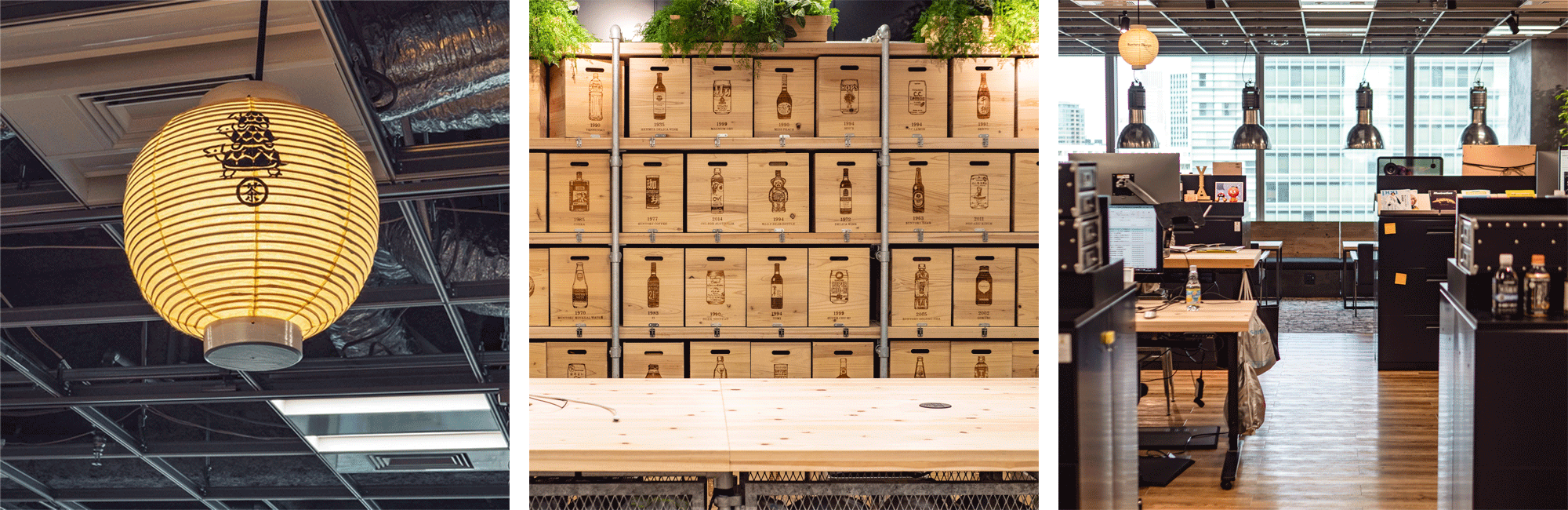
We had a concept for the renewal of the Design Center office: "A Watering Hole in the Middle of a Savanna." If you can picture a big lake, with giraffes and lions drinking right there next to wildebeests — that's the idea. We made it a free-address* office, so all the desks are free for anyone to use — even people from different departments can use them. But we also wanted to make sure you could tell that this was indeed the Design Center, so we didn't use conventional office furniture. Our doors are wide open, but you can still sense there's something different about this section. *Free-address: a seating arrangement where employees don't have assigned desks, and choose any available spot to work from each day.
Now you mention it, the way different people from other departments gather around does make it feel somewhat like a watering hole in a savanna. Maybe even an oasis.
Before the renewal, there were actually some people from other departments that came out and said, "We don't want the Design Center's office to be like ours." They wanted to feel closer to us, but they didn't want the creatives to be in exactly the same environment as themselves either. They wanted there to be a sort of "sacred boundary.”
Is that so? It wasn't a request that you made, but rather one that came from other departments? That's a bit of a surprise.
So, we thought we should make a few alterations. We hung up paper lanterns, and tore out the ceiling to expose the pipes. Even though we'd have no partitions separating us from the neighboring departments, we still wanted to create a space where it would be obviously different to the other areas, where they had desks neatly lined up under all the fluorescent lights.
And it is. It's welcoming, and the moment you take one step inside you notice: "Something's a little different here.”
We have more than 100 wooden boxes on the racks, and they're all hand made. We took illustrations of the products we've released in the past and burned the images onto the boxes with a laser, one by one, all by ourselves. I think having even just one thing like that helps create a different atmosphere, as opposed to simply having office furniture lying around.
The way you made them yourselves is so typical of the Design Center.
At a Glance, It Looks Like a Mess, But Actually...
We had another concept too — "The Garage." By that, we mean the garage at Steve Jobs parents' home, where he first launched his business. We wanted the department to feel free-spirited — not a space that's all neat and tidy, but one that has things strewn everywhere. We thought we ought to treasure all the ideas and fun things that we could come up with from inside such a space. Garages tend to be cluttered, right?
Indeed, I sure can feel the garage vibe.
We have tools hanging here and there, and things scattered around, so you couldn't call it tidy, but it still manages to fit in with the rest of the office, and it just kind of feels like an idea will pop out — that's the space we wanted to create.
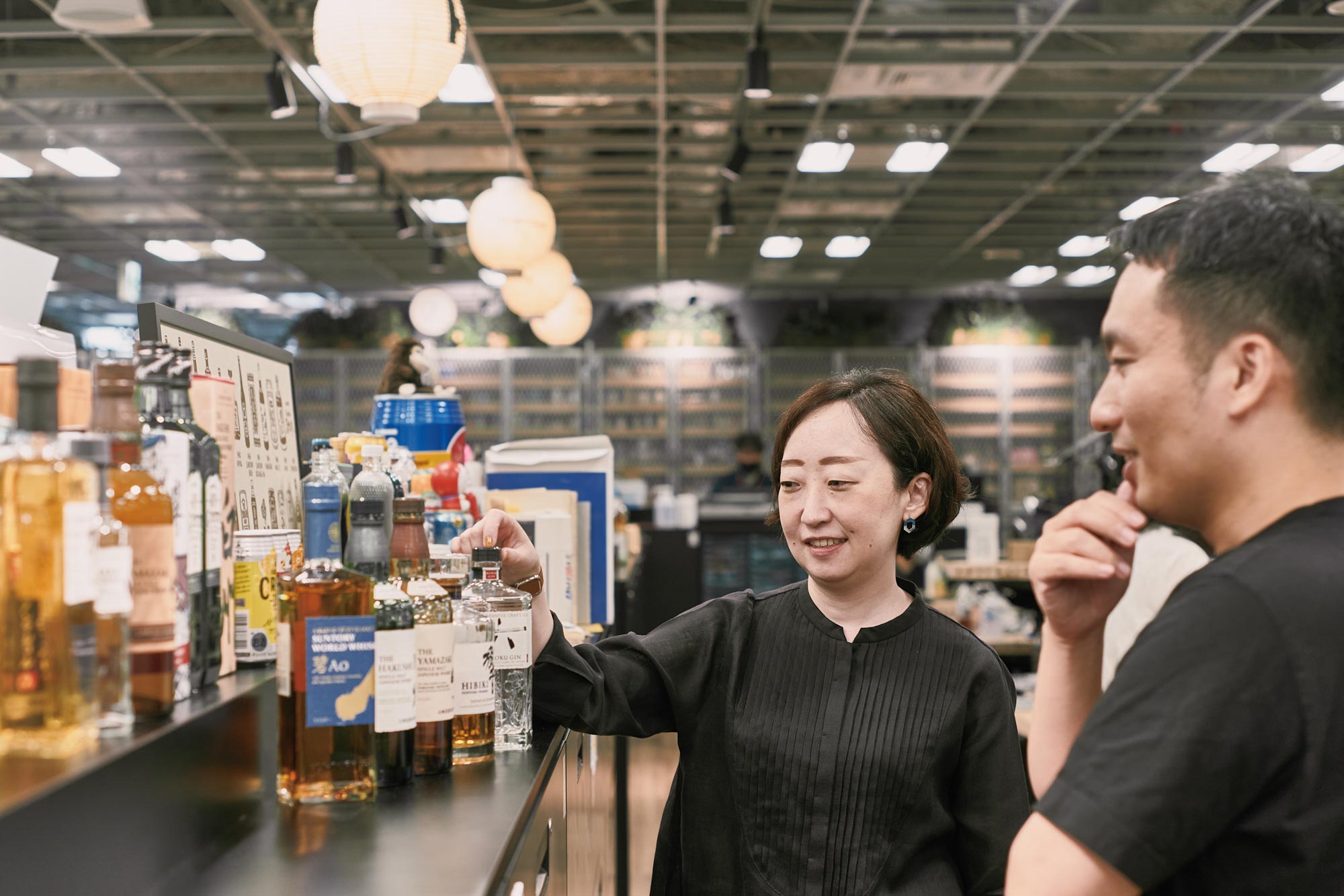
It's almost like the exact opposite of the average design office, where they have plain white walls, and everything's in order. I guess Suntory just isn't that kind of place. And I think a lot of people who work at the Design Center just aren't those type of people either.
The first step we took before doing the renewals was to get everyone together and think about what kind of space we wanted to create. So, we held a workshop with a bunch of people from different departments. Before the workshop, we asked everyone to take a photo of something that they felt embodied "Suntory-ism." In the end, everyone bought in a photo of something messy. Cluttered desks, and so on. All the photos we got were like, "Hey! This is chaos!" That's when it really hit me that our company actually has a culture that's okay with that kind of thing.
You could say the same thing about the way we work on projects here. At other companies, people often flesh out ideas to the finest detail, present the ideas to the group when they're nearly complete, and then they choose from what's been presented. But here at Suntory, we tend to share things while they're still half-baked, chat about them, and then work out the details as we go. So, I do think the office we have here is much more befitting than a tidy, white space.
When someone serves you an elegantly arranged dish, it's hard to make honest, off-the-hand comments about it. You can't just come out and say, "I don't like it." But when someone brings you something that they've simply fried a bit in a pan, and they offer you a taste, it's a lot easier to say, "Actually, I think this needs more salt.”
It sure is.
I think the fact we have an environment where it's easy to make comments like that is one of our best features. We serve the food quick, and taste it while it's still hot.
We have plenty of discussions, and talk for hours on end. But all the chat and banter enables us to gradually define what matters, like the true value of something, and it makes the insight that we're looking for become that much clearer too. So, I often find myself thinking that the chaos is actually warmly embraced as part of the culture here.
People who hate it messy might find it a bit tough.
I think you're right. (laughs)
There's Nothing Wasteful About Waste?
So, you might not want to show something before it's finished. You might be embarrassed to share it at too early a stage. But when it's time to have meetings, it's important to shed that sense of shame. We also really value the idea that "There's more than one correct answer."
To be honest, in the beginning, I found it really difficult. I thought the normal way to design something was to present two ideas, "A" and "B," and the general direction would be chosen from between those. Then you'd go a little bit deeper, make another "A" and "B," and one of those would be chosen again. And you'd keep repeating the process until you narrowed it down, going further and further each time. But here at Suntory, a lot of the time it's like, "Okay, let's try both." Or, "How about we look for a C?" Since I was sure it would be better to choose from either "A" or "B," and pursue ideas further like that, I actually struggled for quite a while.
Yes, I can imagine how'd you be left thinking, "Where is this all going?" I'm sure that must have taken some getting used to.
Back in my previous department, I once had the job of integrating customer data and putting it all on one dashboard. Until then, different pieces of data were kept all over the place, so it was time-consuming to find what you were looking for, and it was just really inefficient... As far as I was concerned, using digital tools to improve efficiency was a total no-brainer, but then someone said to me something totally unexpected: "When you make things more efficient, it means some bits get left out, right? Figure out exactly what they are, and make sure you make up for them. "So, now I realize it's not a good idea to simply look at one facet of things and make a choice between "A" and "B" — it's important to take into consideration all the different merits, and they only become clear once you've looked at them from a number of different perspectives.
Yeah, we tend to do things that are pretty wasteful. Even when it's obvious — "Hey! You're wasting your time!" — but we do it all the time anyway.
But we also often see positives come out of the things that seem like a waste of time, right?
It's not like we don't care about productivity, and we are trying to make things more efficient, but at the same time, I feel we're very conscious of "The importance of waste."
I guess that's part of the corporate culture at Suntory.
Maybe it's because we've experienced successes that stemmed from decisions that weren't entirely logical. Even when the math tells us that one thing is more efficient, or the consumer research says that the other idea scored much higher, if we're all left wondering if those options are really that appealing, we go ahead and choose something else anyway. And I think we've established a good track record of making hits by taking a gamble and going with our own intuition.
Now you mention it, I was told that at the job interview. "Even if the research doesn't come back scoring the highest,
if you think something else is better, you have to choose the one you really like here."
I remember thinking how it's so much easier to justify a decision when you have something solid, like "This one scored the best."
Working on a project that could only be justified with a less-compelling "Because we like it" sounded like hard work.
But then I was told, "That's our culture here. And we work hard to protect it." I remember thinking,
"This sounds like a fun company."
It's reassuring when you have the numbers to back you up, but whenever we actually do decide to go for another option, pretty much all of us are thinking the same thing anyway: "This one's better." So, whenever that happens, it must be because that other option actually has some kind of hidden X factor.
What the Team Needs From a Designer
At Suntory, I feel there are high expectations of the Design Center, even at the planning stage of a product. I once made a presentation about the development of a certain product, after which I received a phone call from one of the board members. He said, "You're the Designer in that team. Why haven't you dug deeper for info about the users, and found more insight?" "You have to be a Counterpart to the Marketing Department." I'd just joined the Design Center, and I was really shocked. I do recognize my faults now though.
If you're going to participate, you have to make sure you provide value. Commit. I think that was the message.
I got the message that here at Suntory, the role of a Designer comes with high expectations, and it also hit home how we're recognized as fulfilling a vital function in Product Development. The fact I got a phone call from a board member was an obvious sign of that. I'd been too naïve in my approach to the project.
But I actually think we're pretty relaxed here at Suntory when it comes to the relationships between superiors and subordinates, regardless of who has whatever official title.
Yes, it does feels like everyone's door is always wide open! We enjoy a nice relationship with the other departments, and with the other members at the Design Center too. We hardly ever get any "top-down" orders, or anything like that. You never even check my designs before I make a presentation, right?
No, I don't. When it's a team project, it's up to that team — that's how we do things here. I don't check everything in advance just because I'm the Center Chief. Quite often I'll only see something for the first time when it's reached the presentation stage. And if I think there's something wrong with it, I'll say so then.
I think that's quite a unique thing to Suntory. Elsewhere, you'd never be able to make a presentation without having it approved by your superior in advance.
Another thing is, the work we actually do on a project doesn't change depending on our age or job title. The way we're structured, each individual gets assigned to a team, whether it's as a Director or a Designer, as each project comes. But that also means everyone has to take on that much more responsibility.
Yes, I do feel that responsibility a lot.
And all that means each person gets to absorb that much more knowledge, which also enables you to perform that much better as a Counterpart. And since you become involved in a range of projects, you end up in a position to offer better input — you're able to say, "Well, this is what happened on another project..." So, the experience you gain really proves to be beneficial.
Each individual acts with responsibility — that's the culture ingrained here at the Design Center.
Each Product Development team has one Designer, and you're it. Since you don't have a superior onboard, you don't even really have a choice — your sense of responsibility has to grow stronger, no matter what. You're given a certain degree of authority, and you have freedom too. And another thing — you even get to choose when you take a day off. As long as you get the work done, nobody minds.
Be that as it may, having only been at the Design Center for six months now, I often worry about whether or not I'm doing good enough. Right from the very beginning, I was assigned to a bunch of different projects, all at once, so I really had no choice but to keep my nose to the grindstone. And it's meant I've had to work with a whole range of different people too. Personally, I find the prospect of making a mistake a little daunting, especially since I'm not so young anymore...
Don't be daunted. We all make mistakes, no matter how old we get. I don't think there's any need to worry at all.
But even so... Having started out as an industrial designer, I'm not that confident when it comes to graphic design.
It sounds like you're concerned about quality control. But that's okay — have faith in your team, and go with what they choose.
So, even the responsibility for quality control lies in the hands of the individual, and each Development Team.
Another thing is, don't you find that the people here at the Design Center end up noticing things, and sharing their thoughts, without you even asking anyway? They'll come up and say, "I'm not sure about that." "Why don't you try this?”
That actually happened just the other day. I'd left a design on the desk, and then everyone started coming up and chatting about it... Later, I even got an email with some advice that said, "Why don't you try something like this?" I thought, "Wow, that's kind."
We have a lot of people here who love giving advice.
Sometimes the idle chats that seem like a waste of time end up proving extremely valuable, and surprisingly enough, it's the detours we take that actually end up being the best way to get things done.
The Shopping Arcade Full of Unique Characters and Warm Friends
People from the other departments often describe the Design Center as being like a shopping arcade full of individually
owned businesses. We each have our own distinct personalities, with our own unique strengths. We end up working solo
quite a lot, but there's definitely a sense of unity in the arcade. And once you open up shop, everyone treats you kindly,
as a fellow member of the community. You really get the sense that everyone's kind to newcomers, always looking out for them,
and eager to help them learn the ropes.
When you're in an environment like this, with so many different personalities around, it's not like you have just one person
to choose from to be your role model. How do young designers tend to mature here?
Well, as they say, "learn through imitation," right? Looking and learning works, but I think the first thing is to not try too hard.
Just watch the people around you, and realize things like, "Okay, so that's how it's done here." "So, it is okay to speak up."
And so on. I'd like young designers to just pick things up naturally. You get plenty of chances to take a swing here.
And as you imitate others, you should always be thinking about how you would actually prefer to do things.
I think that's the way to mature as a creator who uses your own initiative. What we end up with is a collection of
strong individuals, but we're still a group that embodies the characteristics of Suntory.
Maybe that's why people feel a certain sense of chaos from us.
I see. You're not actively creating a garage-like sense of chaos, it just happens organically.
I think that peculiar sense of chaos is part of what makes Suntory's Design Center unique, and it's something I'd like to keep evolving. I want to make that flavor a whole lot stronger, and make sure it gets passed on properly to the next generation. The way people work has changed dramatically over the past few years, but I still hope to pass down what makes this place great.
So, the Design Center is a place where a bunch of different personalities come together. Which sounds exactly like a watering hole in a savanna, where a wide range of animals come together.
That's right. People from the other departments can come and go as they please, so it's an open watering hole,
and I'd like it to be a place where people can share thoughts and information freely too. That's why I want to make the culture
that we've created at the Design Center even stronger. Bring in a more diverse range of shops. Make expansions...
It may actually be exactly like making a shopping arcade bigger.
So, the Design Center is a garage. A watering hole. And a shopping arcade... Right?
Yes. That sounds just like chaos.